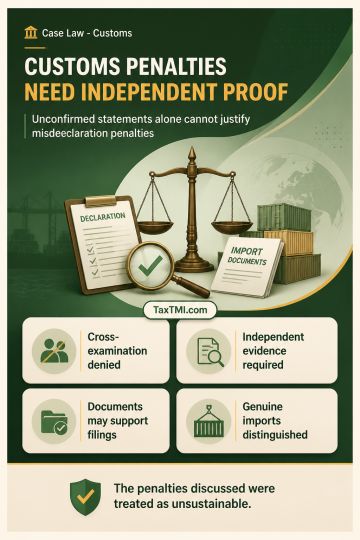
Cross-examination rights and corroborated evidence limit customs penalties for misdeclaration in genuine import transactions involving documented clea...
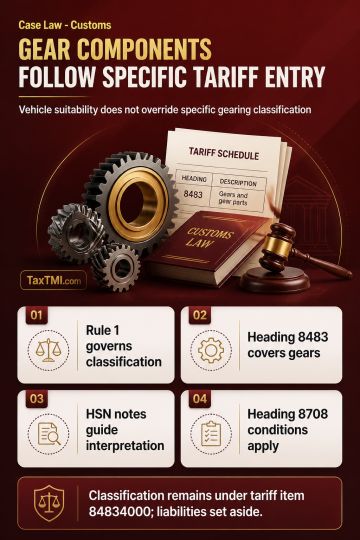
Tariff classification of vehicle gear components follows the specific gearing entry, displacing motor-vehicle parts classification and related liabili...
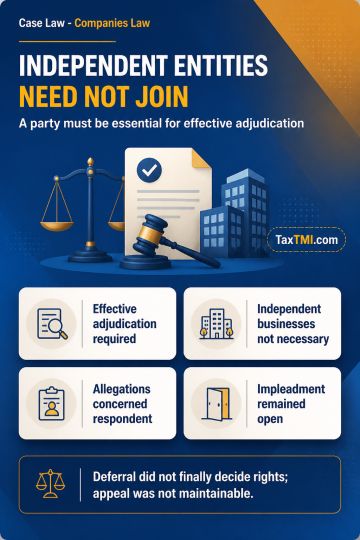
Necessary-party requirements limit impleadment of independent entities, while deferred consideration does not create an appealable adverse determinati...
Food supplement classification requires common parlance and authoritative tests, preventing treatment as proprietary Ayurvedic medicines without suppo...
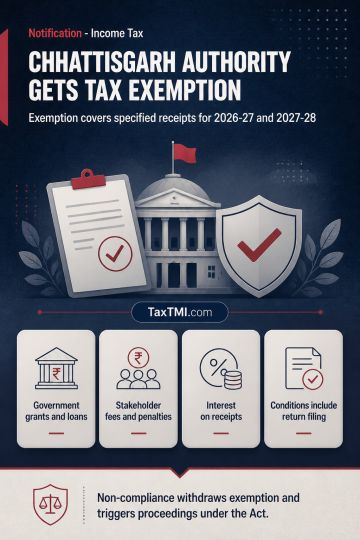
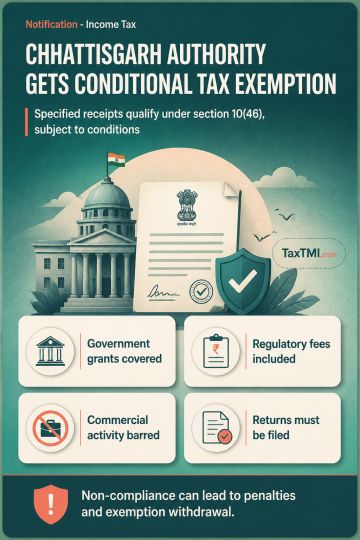
Specified regulatory authority income receives conditional tax exemption, subject to non-commercial activity, unchanged income character, and return f...
Tax exemption for regulatory authority income applies retrospectively, subject to non-commercial activity, unchanged income sources, and return-filing...
Defreezing of bank accounts - Implication of Non-Reporting of Seizure Forthwith to the Magistrate - The Supreme Court judgment addresses the critical question of whether delayed reporting of seizures to the Magistrate under Section 102(3) Cr.P.C. nullifies the seizure order. The Court traced the legislative history and examined conflicting precedents, concluding that delayed reporting is a procedural irregularity rather than a substantive illegality. The Court defined the term "forthwith" and clarified that non-compliance with the reporting requirement does not invalidate the seizure. The validity of the seizure depends on the jurisdictional and substantive grounds, not procedural compliance. - In the present case, the Supreme Court overturned the High Court’s decision to de-freeze the bank accounts of the respondents, directing them to execute a bond to deposit the seized amount if found guilty.
Defreezing of bank accounts - Implication of Non-Reporting of Seizure Forthwith to the Magistrate - The Supreme Court judgment addresses the critical question of whether delayed reporting of seizures to the Magistrate under Section 102(3) Cr.P.C. nullifies the seizure order. The Court traced the legislative history and examined conflicting precedents, concluding that delayed reporting is a procedural irregularity rather than a substantive illegality. The Court defined the term "forthwith" and clarified that non-compliance with the reporting requirement does not invalidate the seizure. The validity of the seizure depends on the jurisdictional and substantive grounds, not procedural compliance. - In the present case, the Supreme Court overturned the High Court’s decision to de-freeze the bank accounts of the respondents, directing them to execute a bond to deposit the seized amount if found guilty.
Note: It is a system-generated summary and is for quick reference only.
 TaxTMI
  TaxTMI
 of 4813










 Join Channel