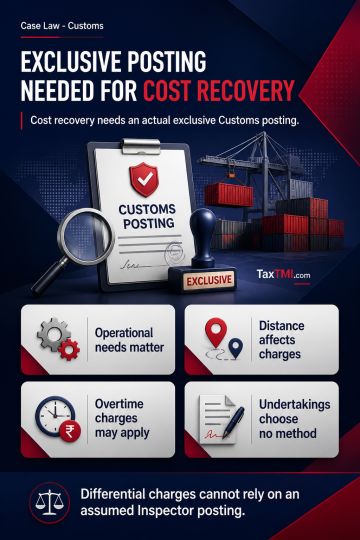
Interactive touchscreen panels with integrated computing functions fall under automatic data-processing machines rather than display monitors for cust...
Ex parte injunction service requirements were substantially met, while civil recovery and SFIO investigation into provident fund defalcation continued...
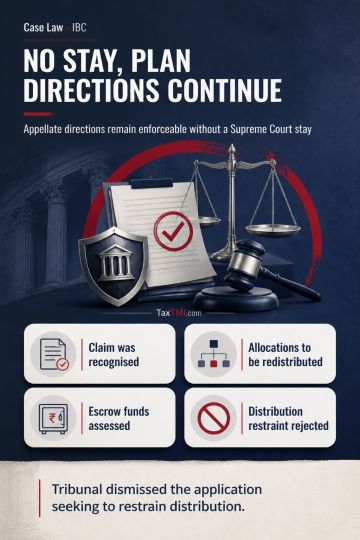
Enforcement of resolution-plan directions continues without a Supreme Court stay, preventing suspension of redistribution and escrowed-fund distributi...
Third-party ownership claims over attached property require Special Court adjudication where purchasers lack registered sale deeds and bona fides rema...
Pure-agent reimbursements in clearing and forwarding services are excluded from taxable value when qualifying third-party payments are properly record...
Customs relief for Strait of Hormuz maritime disruptions remains available, with existing conditions continuing unchanged through the extended validit...
Penalty u/s 271 (1) (c) - Income disclosed only after the search and seizure operation - The High Court emphasized that Explanation 5A of Section 271(1)(c) deems concealed income even if disclosed post-search, and upheld the assessing officer’s initiation of penalty proceedings based on detailed findings of concealed income in the assessment orders. The Court referenced key Supreme Court judgments, asserting that the satisfaction for penalty can be inferred from the assessment order and need not be explicitly stated in the notice if the order details the concealment. It also rejected the respondent’s defense of voluntary disclosure, noting it was made only after irrefutable evidence of concealment emerged during the search. It set aside the ITAT’s order, reinstated the penalties, and remanded the matter to the ITAT for adjudication on merits.
Penalty u/s 271 (1) (c) - Income disclosed only after the search and seizure operation - The High Court emphasized that Explanation 5A of Section 271(1)(c) deems concealed income even if disclosed post-search, and upheld the assessing officer’s initiation of penalty proceedings based on detailed findings of concealed income in the assessment orders. The Court referenced key Supreme Court judgments, asserting that the satisfaction for penalty can be inferred from the assessment order and need not be explicitly stated in the notice if the order details the concealment. It also rejected the respondent’s defense of voluntary disclosure, noting it was made only after irrefutable evidence of concealment emerged during the search. It set aside the ITAT’s order, reinstated the penalties, and remanded the matter to the ITAT for adjudication on merits.
Note: It is a system-generated summary and is for quick reference only.
 TaxTMI
  TaxTMI
 of 4811

















 Join Channel