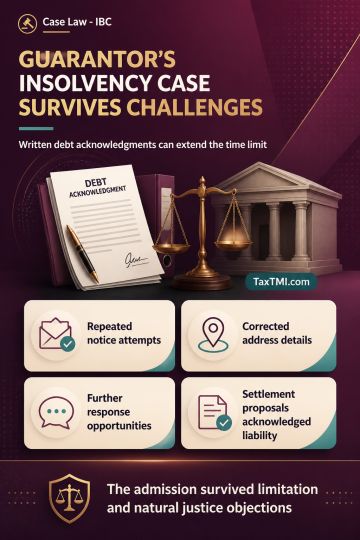
Service of notice and contractual debt acknowledgment preserved insolvency admission against a corporate guarantor despite limitation and natural just...
Original works exemption excludes standalone boulder transportation, leaving subcontracted railway-project transport services subject to service tax l...
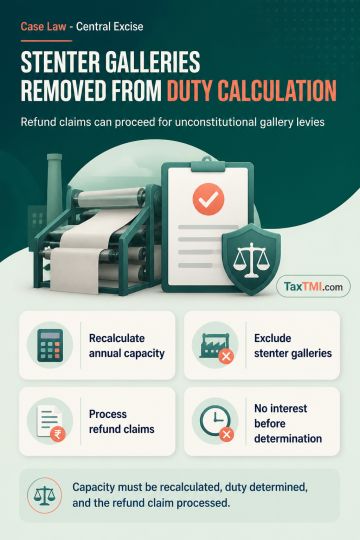
Annual production capacity determinations excluding stenter galleries support refunds for unconstitutional excise levies without an unjust-enrichment ...
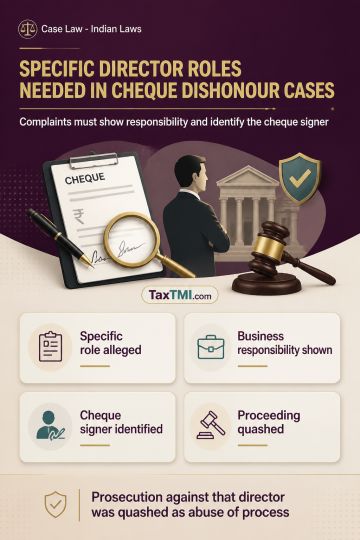
Vicarious liability for cheque dishonour requires specific allegations of responsibility and cheque signatory; generic director allegations cannot sus...
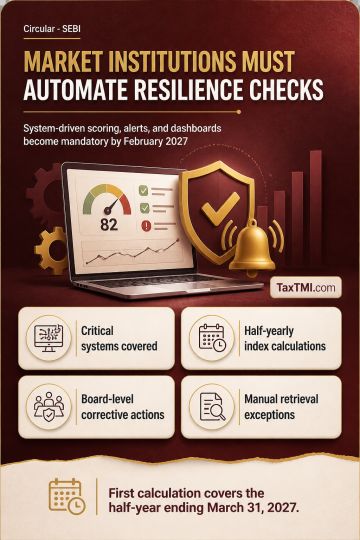
IT Resilience Index requires market infrastructure institutions to automate resilience scoring, early warnings, and continuous service-delivery monito...
Levy of penalty - Compliance with the E-Way bill as required under the provisions of the CGST/UPGST Act and related rule or not - presumption of tax evasion in its absence - The High Court scrutinized the timing of E-Way Bill download and interception, concluding that the E-Way Bill was indeed downloaded before the interception, indicating compliance with the law. The Court noted that the E-Way Bill and invoice matched the goods, suggesting no intent to evade tax. - The Court observed that the penalty order was passed on the same day as the show cause notice, denying the petitioner an opportunity to respond, thus violating principles of natural justice. In light of these findings, the High Court allowed the writ petition, quashing the penalty orders and directing the refund of the tax and penalty amounts deposited by the petitioner.
Levy of penalty - Compliance with the E-Way bill as required under the provisions of the CGST/UPGST Act and related rule or not - presumption of tax evasion in its absence - The High Court scrutinized the timing of E-Way Bill download and interception, concluding that the E-Way Bill was indeed downloaded before the interception, indicating compliance with the law. The Court noted that the E-Way Bill and invoice matched the goods, suggesting no intent to evade tax. - The Court observed that the penalty order was passed on the same day as the show cause notice, denying the petitioner an opportunity to respond, thus violating principles of natural justice. In light of these findings, the High Court allowed the writ petition, quashing the penalty orders and directing the refund of the tax and penalty amounts deposited by the petitioner.
Note: It is a system-generated summary and is for quick reference only.
 TaxTMI
  TaxTMI
 of 4828







 Join Channel