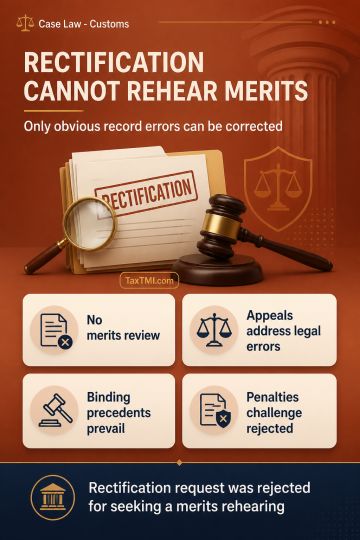
Rectification of mistake remains limited to self-evident record errors, preventing merits review through miscellaneous applications and preserving fin...
Tender creditworthiness conditions may extend to de facto Promoter Directors, with post-participation challenges generally barred absent arbitrariness...
Corporate representation in PMLA summons proceedings permitted through an authorised signatory, subject to directors' continuing cooperation and atten...
Helicopter charter classification requires effective control analysis, while territorial performance, reasoned credit orders and wilful suppression de...
Specified fund definition expands PAN exemption eligibility for registered alternative investment funds and qualifying International Financial Service...
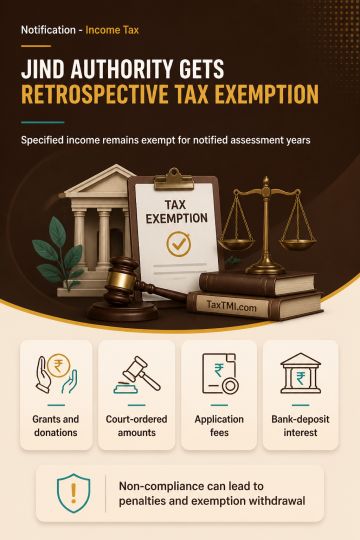
Tax exemption for specified legal-services authority income applies retrospectively, subject to non-commercial activity, unchanged income sources, and...
Income from Other Sources u/s 56(2) - interest received u/Sec. 28 of the Land Acquisition Act, 1894 granted by the learned Reference Court - The Tribunal agrees with the appellant's contention that interest received under Section 28 of the Land Acquisition Act is part of the land acquisition compensation itself and thus not taxable under Section 56(2) of the Income Tax Act. - The Tribunal holds that decisions of the Bombay bench of the High Court, within its territorial jurisdiction, prevail over those of the Aurangabad bench. Therefore, it upholds the appellant's argument that the Bombay bench's decision applies to the case at hand, leading to a favorable outcome for the assessee.
Income from Other Sources u/s 56(2) - interest received u/Sec. 28 of the Land Acquisition Act, 1894 granted by the learned Reference Court - The Tribunal agrees with the appellant's contention that interest received under Section 28 of the Land Acquisition Act is part of the land acquisition compensation itself and thus not taxable under Section 56(2) of the Income Tax Act. - The Tribunal holds that decisions of the Bombay bench of the High Court, within its territorial jurisdiction, prevail over those of the Aurangabad bench. Therefore, it upholds the appellant's argument that the Bombay bench's decision applies to the case at hand, leading to a favorable outcome for the assessee.
Note: It is a system-generated summary and is for quick reference only.
 TaxTMI
  TaxTMI
 of 4826



















 Join Channel