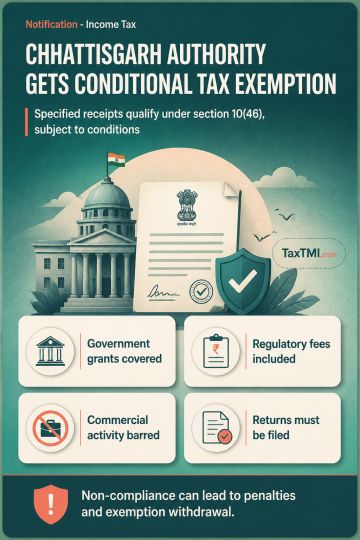
Specified regulatory authority income receives conditional tax exemption, subject to non-commercial activity, unchanged income character, and return f...
Tax exemption for regulatory authority income applies retrospectively, subject to non-commercial activity, unchanged income sources, and return-filing...
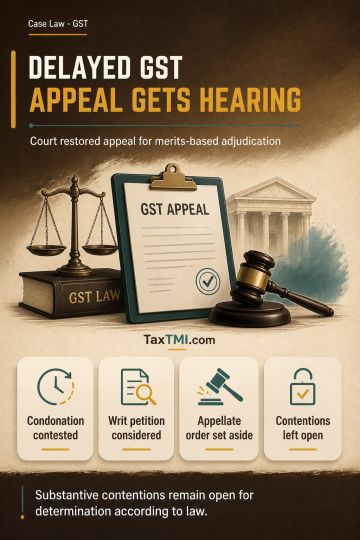
Input tax credit conditions remain constitutionally valid, with eligible recipient claims considered under GST circulars and retrospective filing dead...
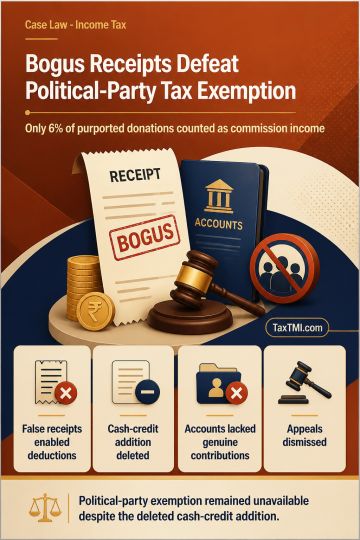
Bogus donation receipts justified commission income assessment and defeated political-party tax exemption for inaccurate accounts and reporting failur...
Pure reimbursement without income element escapes tax withholding, while delayed withholding and unsupported provisions face deferred or renewed scrut...
Public benefit requirement defeats charitable registration where residents' association services are reciprocal, member-only facilities governed by mu...
Income from Other Sources u/s 56(2) - interest received u/Sec. 28 of the Land Acquisition Act, 1894 granted by the learned Reference Court - The Tribunal agrees with the appellant's contention that interest received under Section 28 of the Land Acquisition Act is part of the land acquisition compensation itself and thus not taxable under Section 56(2) of the Income Tax Act. - The Tribunal holds that decisions of the Bombay bench of the High Court, within its territorial jurisdiction, prevail over those of the Aurangabad bench. Therefore, it upholds the appellant's argument that the Bombay bench's decision applies to the case at hand, leading to a favorable outcome for the assessee.
Income from Other Sources u/s 56(2) - interest received u/Sec. 28 of the Land Acquisition Act, 1894 granted by the learned Reference Court - The Tribunal agrees with the appellant's contention that interest received under Section 28 of the Land Acquisition Act is part of the land acquisition compensation itself and thus not taxable under Section 56(2) of the Income Tax Act. - The Tribunal holds that decisions of the Bombay bench of the High Court, within its territorial jurisdiction, prevail over those of the Aurangabad bench. Therefore, it upholds the appellant's argument that the Bombay bench's decision applies to the case at hand, leading to a favorable outcome for the assessee.
Note: It is a system-generated summary and is for quick reference only.
 TaxTMI
  TaxTMI
 of 4824


















 Join Channel


