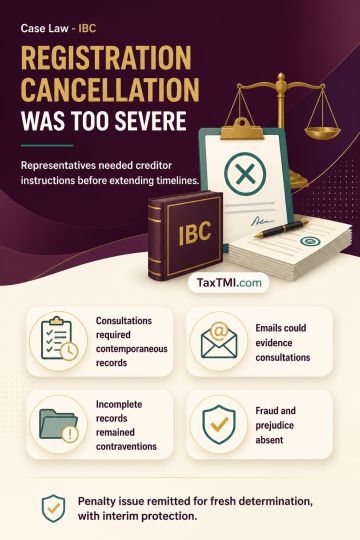
Disciplinary proportionality requires penalties for Authorised Representative misconduct to match proven harm, leading to reconsideration of registrat...
Political contribution deductions require genuine transactions; banking records and party registration alone cannot defeat evidence of accommodation e...
Post-death GST liability permits fresh proceedings against legal representatives, while discontinued-business recovery remains limited to the inherite...
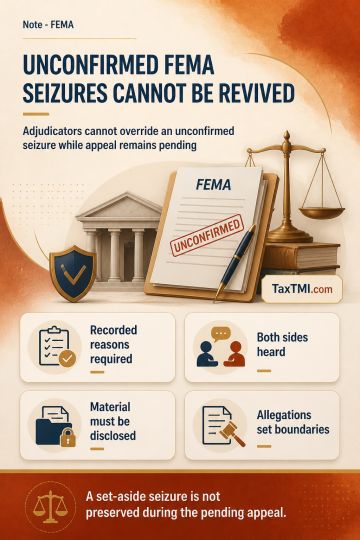
Non-confirmation of FEMA seizure prevents adjudicators from overriding pending appellate findings on recorded reasons and suspected foreign asset hold...
Classification of goods - Sulphuric Acid, used in the manufacture of Agricultural Grade Zinc Sulphate - classified as fertiliser under Chapter 31 of CETA or classifiable under 28332990 of CETA - Both appellants successfully argued that despite Zinc Sulphate’s classification under a non-fertilizer tariff, its use as a fertilizer in agriculture justified the exemption. The Tribunal aligned with this broader, functional interpretation of the law, setting a precedent for similar cases, where the end use of the product determines its classification for tax purposes rather than strict adherence to tariff codes.
Classification of goods - Sulphuric Acid, used in the manufacture of Agricultural Grade Zinc Sulphate - classified as fertiliser under Chapter 31 of CETA or classifiable under 28332990 of CETA - Both appellants successfully argued that despite Zinc Sulphate’s classification under a non-fertilizer tariff, its use as a fertilizer in agriculture justified the exemption. The Tribunal aligned with this broader, functional interpretation of the law, setting a precedent for similar cases, where the end use of the product determines its classification for tax purposes rather than strict adherence to tariff codes.
Note: It is a system-generated summary and is for quick reference only.
 TaxTMI
  TaxTMI
 of 4921