Food supplement classification requires common parlance and authoritative tests, preventing treatment as proprietary Ayurvedic medicines without suppo...
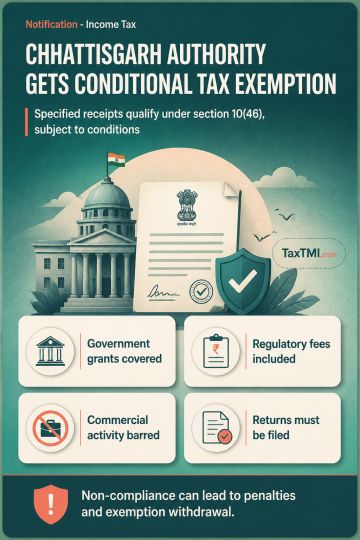
Specified regulatory authority income receives conditional tax exemption, subject to non-commercial activity, unchanged income character, and return f...
Tax exemption for regulatory authority income applies retrospectively, subject to non-commercial activity, unchanged income sources, and return-filing...
Input tax credit conditions remain constitutionally valid, with eligible recipient claims considered under GST circulars and retrospective filing dead...
Bogus donation receipts justified commission income assessment and defeated political-party tax exemption for inaccurate accounts and reporting failur...
Principles of Res-judicata - suo-moto re-credit taken instead of filing refund application - The Tribunal noted that the initial rounds of litigation, up to the High Court, had affirmed the appellant's eligibility to claim Cenvat credit under Notification No. 6/2006-CE, which the Tribunal upheld. It was observed that the re-credit was an accounting correction and did not require a refund claim, especially since it was done with Revenue's intimation. The Tribunal ordered the refund of the duty amount deposited by the appellant, with interest. This decision rested on the principle that once an appellate decision becomes final, it is binding, and the administrative authorities must comply without re-litigating settled matters.
Principles of Res-judicata - suo-moto re-credit taken instead of filing refund application - The Tribunal noted that the initial rounds of litigation, up to the High Court, had affirmed the appellant's eligibility to claim Cenvat credit under Notification No. 6/2006-CE, which the Tribunal upheld. It was observed that the re-credit was an accounting correction and did not require a refund claim, especially since it was done with Revenue's intimation. The Tribunal ordered the refund of the duty amount deposited by the appellant, with interest. This decision rested on the principle that once an appellate decision becomes final, it is binding, and the administrative authorities must comply without re-litigating settled matters.
Note: It is a system-generated summary and is for quick reference only.
 TaxTMI
 of 4803




















 Join Channel


 TaxTMI