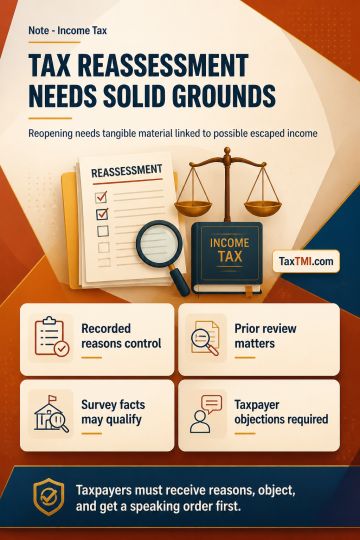
Opportunity to furnish unsecured-loan confirmations is required before reassessment initiation; proceedings require fresh consideration after taxpayer...
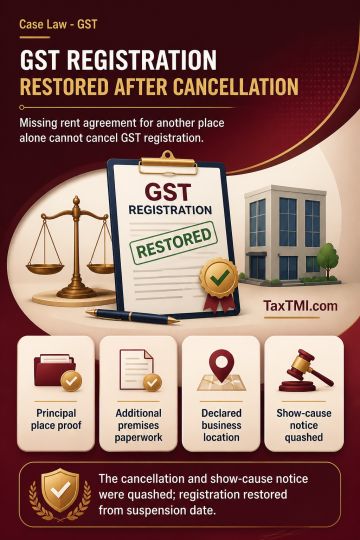
Cancellation of GST registration of the petitioner - The High Court examined the discrepancy between the grounds cited in the show cause notice and those in the cancellation order. It found that the reasons for cancellation, invoking clause 29(2)(e) alleging fraud or misstatement, were not adequately communicated to the petitioner. Moreover, the contents of the crucial email relied upon were not disclosed to the petitioner, denying them the opportunity to refute the allegations. - The Court observed that the respondents' actions, such as scheduling a personal hearing before the petitioner had a chance to respond fully, indicated a lack of procedural fairness. This, coupled with the failure to provide essential documents and information to the petitioner, reinforced the perception of predetermined action. - Consequently, the Court set aside the cancellation order.
Cancellation of GST registration of the petitioner - The High Court examined the discrepancy between the grounds cited in the show cause notice and those in the cancellation order. It found that the reasons for cancellation, invoking clause 29(2)(e) alleging fraud or misstatement, were not adequately communicated to the petitioner. Moreover, the contents of the crucial email relied upon were not disclosed to the petitioner, denying them the opportunity to refute the allegations. - The Court observed that the respondents' actions, such as scheduling a personal hearing before the petitioner had a chance to respond fully, indicated a lack of procedural fairness. This, coupled with the failure to provide essential documents and information to the petitioner, reinforced the perception of predetermined action. - Consequently, the Court set aside the cancellation order.
Note: It is a system-generated summary and is for quick reference only.
 TaxTMI
  TaxTMI
 of 4918