Food supplement classification requires common parlance and authoritative tests, preventing treatment as proprietary Ayurvedic medicines without suppo...
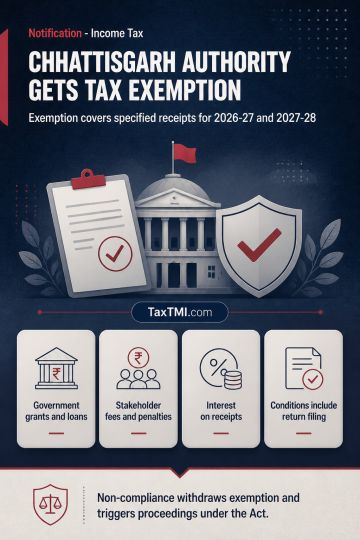
Specified regulatory authority income receives conditional tax exemption, subject to non-commercial activity, unchanged income character, and return f...
Tax exemption for regulatory authority income applies retrospectively, subject to non-commercial activity, unchanged income sources, and return-filing...
Input tax credit conditions remain constitutionally valid, with eligible recipient claims considered under GST circulars and retrospective filing dead...
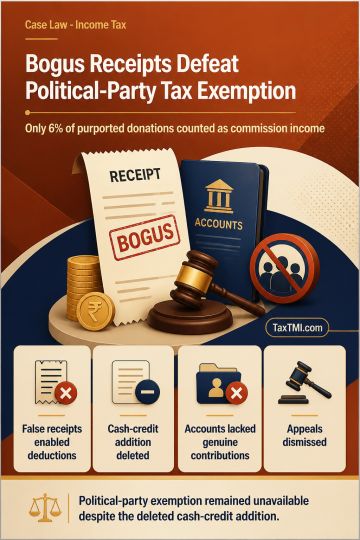
Bogus donation receipts justified commission income assessment and defeated political-party tax exemption for inaccurate accounts and reporting failur...
Cancellation of GST registration of the petitioner - The High Court examined the discrepancy between the grounds cited in the show cause notice and those in the cancellation order. It found that the reasons for cancellation, invoking clause 29(2)(e) alleging fraud or misstatement, were not adequately communicated to the petitioner. Moreover, the contents of the crucial email relied upon were not disclosed to the petitioner, denying them the opportunity to refute the allegations. - The Court observed that the respondents' actions, such as scheduling a personal hearing before the petitioner had a chance to respond fully, indicated a lack of procedural fairness. This, coupled with the failure to provide essential documents and information to the petitioner, reinforced the perception of predetermined action. - Consequently, the Court set aside the cancellation order.
Cancellation of GST registration of the petitioner - The High Court examined the discrepancy between the grounds cited in the show cause notice and those in the cancellation order. It found that the reasons for cancellation, invoking clause 29(2)(e) alleging fraud or misstatement, were not adequately communicated to the petitioner. Moreover, the contents of the crucial email relied upon were not disclosed to the petitioner, denying them the opportunity to refute the allegations. - The Court observed that the respondents' actions, such as scheduling a personal hearing before the petitioner had a chance to respond fully, indicated a lack of procedural fairness. This, coupled with the failure to provide essential documents and information to the petitioner, reinforced the perception of predetermined action. - Consequently, the Court set aside the cancellation order.
Note: It is a system-generated summary and is for quick reference only.
 TaxTMI
 of 4803

















 Join Channel


 TaxTMI