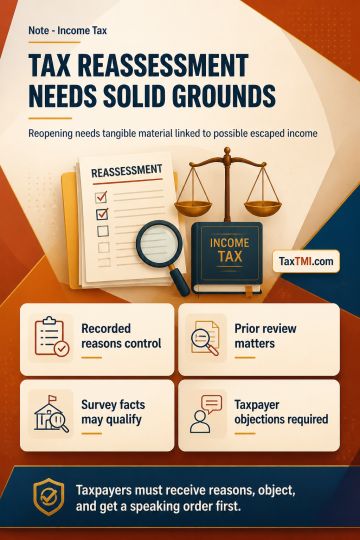
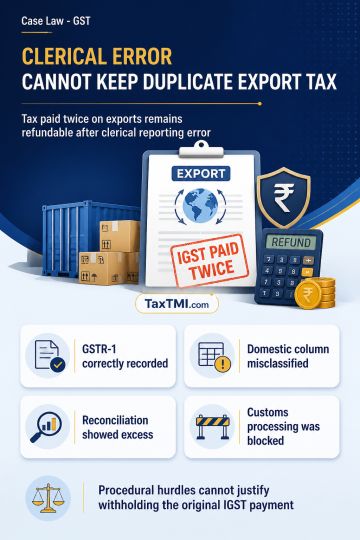
Rectification of mistake u/s 154 - tax paid on more than one occasion, and claims its refund u/s 154 - The High Court referred to Article 265 of the Constitution of India, which states that taxes cannot be levied or collected except by authority of law. They analyzed previous court judgments and concluded that both errors of fact and errors of law can constitute 'error apparent on the face of record'. The key criterion is that the error should be clear, obvious, and not require elaborate arguments to establish. Since this error was apparent from the records, the Court concluded that it fell within the scope of Section 154.
Rectification of mistake u/s 154 - tax paid on more than one occasion, and claims its refund u/s 154 - The High Court referred to Article 265 of the Constitution of India, which states that taxes cannot be levied or collected except by authority of law. They analyzed previous court judgments and concluded that both errors of fact and errors of law can constitute 'error apparent on the face of record'. The key criterion is that the error should be clear, obvious, and not require elaborate arguments to establish. Since this error was apparent from the records, the Court concluded that it fell within the scope of Section 154.
Note: It is a system-generated summary and is for quick reference only.
 TaxTMI
  TaxTMI
 of 4920