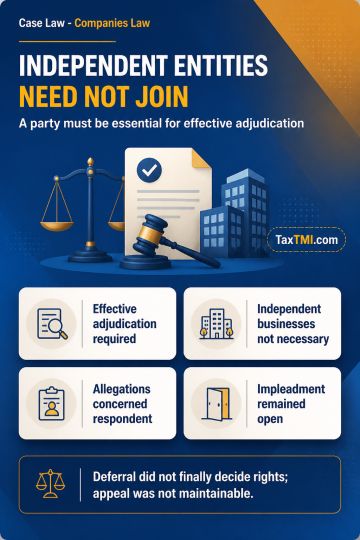
Necessary-party requirements limit impleadment of independent entities, while deferred consideration does not create an appealable adverse determinati...
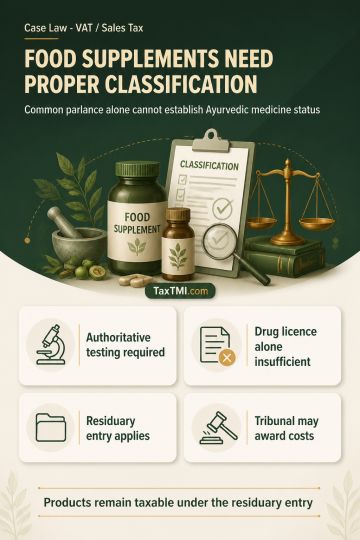
Food supplement classification requires common parlance and authoritative tests, preventing treatment as proprietary Ayurvedic medicines without suppo...
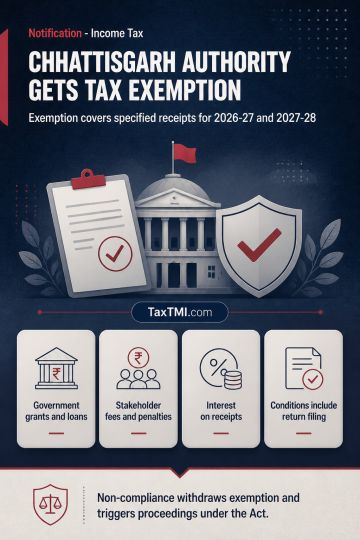
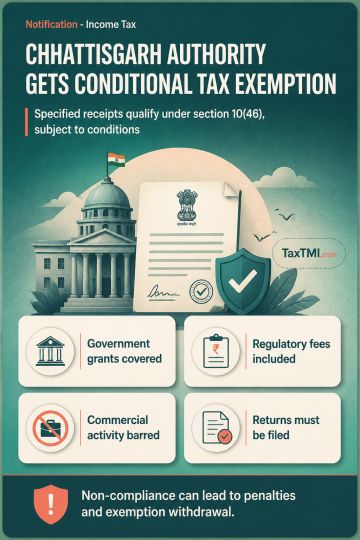
Specified regulatory authority income receives conditional tax exemption, subject to non-commercial activity, unchanged income character, and return f...
Tax exemption for regulatory authority income applies retrospectively, subject to non-commercial activity, unchanged income sources, and return-filing...
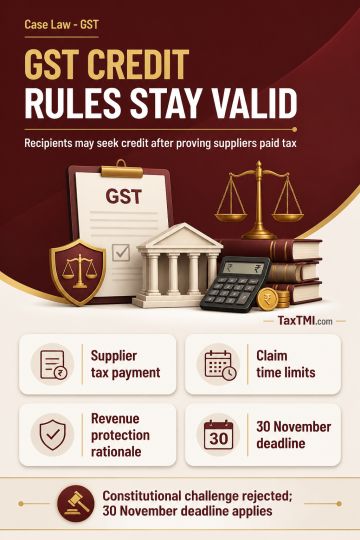
Input tax credit conditions remain constitutionally valid, with eligible recipient claims considered under GST circulars and retrospective filing dead...
Page of 4790
Press 'Enter' after typing page number.
481 to 500 of 95794 Results
❮
❯
❯❯
0 / 200
Expand Note
Add to Folder
No Folders have been created
+
Are you sure you want to delete "My most important" ?
Rectification of mistake u/s 154 - tax paid on more than one occasion, and claims its refund u/s 154 - The High Court referred to Article 265 of the Constitution of India, which states that taxes cannot be levied or collected except by authority of law. They analyzed previous court judgments and concluded that both errors of fact and errors of law can constitute 'error apparent on the face of record'. The key criterion is that the error should be clear, obvious, and not require elaborate arguments to establish. Since this error was apparent from the records, the Court concluded that it fell within the scope of Section 154.
Rectification of mistake u/s 154 - tax paid on more than one occasion, and claims its refund u/s 154 - The High Court referred to Article 265 of the Constitution of India, which states that taxes cannot be levied or collected except by authority of law. They analyzed previous court judgments and concluded that both errors of fact and errors of law can constitute 'error apparent on the face of record'. The key criterion is that the error should be clear, obvious, and not require elaborate arguments to establish. Since this error was apparent from the records, the Court concluded that it fell within the scope of Section 154.
Note: It is a system-generated summary and is for quick reference only.
 TaxTMI
 of 4790






 Join Channel


 TaxTMI