Inherited property sale proceeds require capital-gains treatment where ownership is supported by evidence, not suspicion or unverified signature doubt...
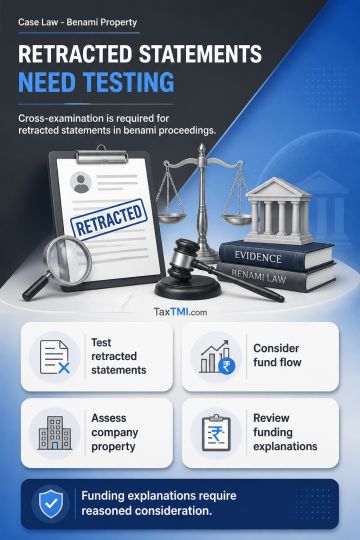
Cross-examination of retracted statements is essential where foundational evidence supports a benami allegation and documented funding explanations re...
Capital-goods exemption covers plant-modernisation accessories, while the import restriction applies only to earlier capital-goods components and spar...
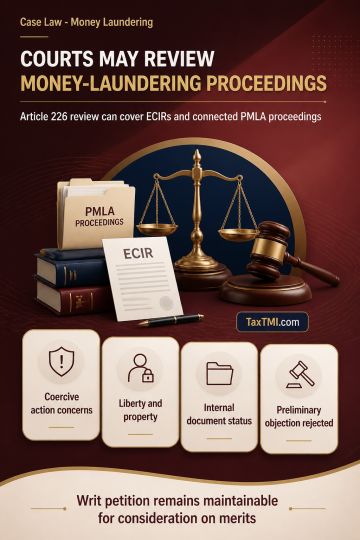
Constitutional judicial review permits challenges to ECIRs and connected money-laundering proceedings where coercive action affects fundamental intere...
Import of Alkalised Cocoa Powder from Malaysia - Denied FTA benefit - The Tribunal observed that the benefit was denied solely based on the department's suspicion that the value addition condition was not met. However, no independent verification was conducted to support this allegation. - The Tribunal highlighted that according to Annexure-III of the Customs Tariff, a retroactive check by the customs authorities of India or reference to issuing authorities for verification is required to dispute the certificate of origin. In this case, no such verification was carried out, failing to comply with the requirements of the Free Trade Agreement. Further the CESTAT concluded that no mala fide could be attributed to the appellant. Therefore, the demand was considered time-barred.
Import of Alkalised Cocoa Powder from Malaysia - Denied FTA benefit - The Tribunal observed that the benefit was denied solely based on the department's suspicion that the value addition condition was not met. However, no independent verification was conducted to support this allegation. - The Tribunal highlighted that according to Annexure-III of the Customs Tariff, a retroactive check by the customs authorities of India or reference to issuing authorities for verification is required to dispute the certificate of origin. In this case, no such verification was carried out, failing to comply with the requirements of the Free Trade Agreement. Further the CESTAT concluded that no mala fide could be attributed to the appellant. Therefore, the demand was considered time-barred.
Note: It is a system-generated summary and is for quick reference only.
 TaxTMI
 of 4788












 Join Channel


 TaxTMI