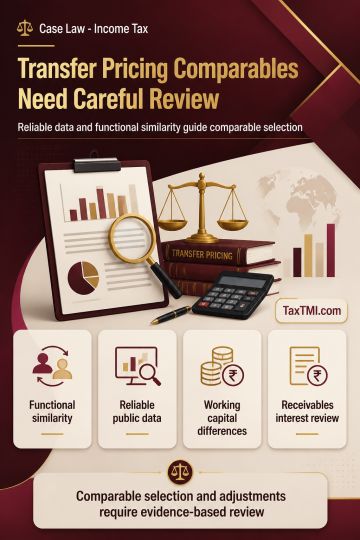
Transfer pricing comparability requires functional alignment, reliable financial data, and careful review of working capital and receivables adjustmen...
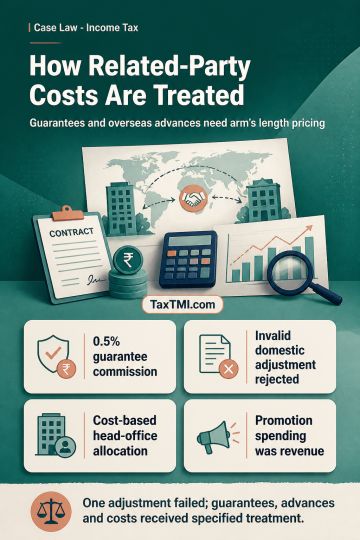
Transfer pricing rules require benchmarking corporate guarantees and associated-enterprise advances, while invalid domestic-transaction adjustments ca...
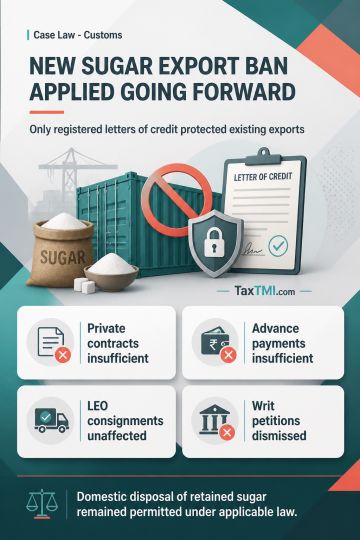
Prospective sugar export prohibition required registered letters of credit; private contracts and export quotas created no enforceable continuation ri...
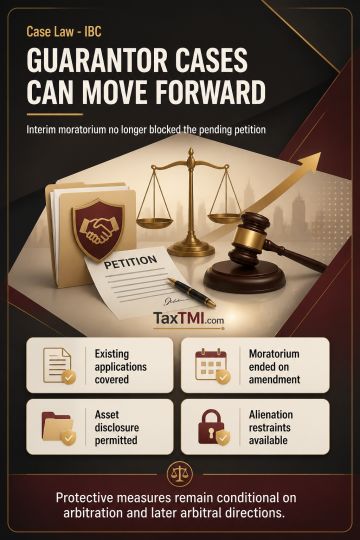
Retroactive interim-moratorium exclusion permits protective asset disclosure and preservation measures against personal guarantors pending arbitration...
Levy of penalty @200% - e-way bill which was generated by the appellant had expired and at the time when the vehicle was intercepted four days had lapsed - The High Court acknowledged that penalties should not be imposed without considering mens rea. While the statute allows for a penalty of 200%, it does not absolve authorities from considering circumstances and intentions. Despite the expiration of the e-way bill, the Court found that the appellant's failure to extend the validity was a crucial factor. However, it noted that the penalty was calculated on a higher value than the invoice, indicating arbitrariness on the part of the authorities. Ultimately, the Court partially allowed the appeal, imposing a reduced penalty but refrained from completely exonerating the appellant.
Levy of penalty @200% - e-way bill which was generated by the appellant had expired and at the time when the vehicle was intercepted four days had lapsed - The High Court acknowledged that penalties should not be imposed without considering mens rea. While the statute allows for a penalty of 200%, it does not absolve authorities from considering circumstances and intentions. Despite the expiration of the e-way bill, the Court found that the appellant's failure to extend the validity was a crucial factor. However, it noted that the penalty was calculated on a higher value than the invoice, indicating arbitrariness on the part of the authorities. Ultimately, the Court partially allowed the appeal, imposing a reduced penalty but refrained from completely exonerating the appellant.
Note: It is a system-generated summary and is for quick reference only.
 TaxTMI
 of 4780





 Join Channel


 TaxTMI