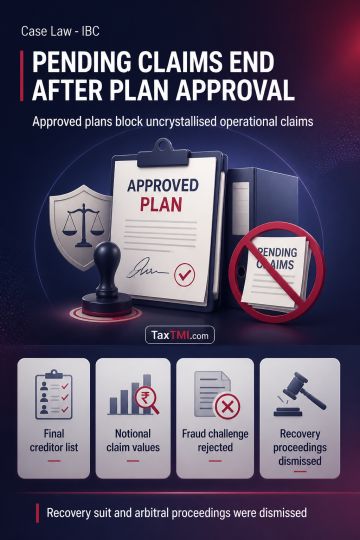
Clean slate principle extinguishes uncrystallised operational claims and bars continuation of pending recovery and arbitral proceedings after plan app...
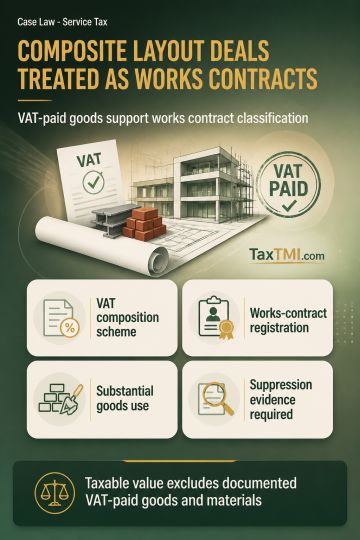
Works contract classification governs composite layout-development contracts where VAT-paid goods are transferred alongside construction and infrastru...
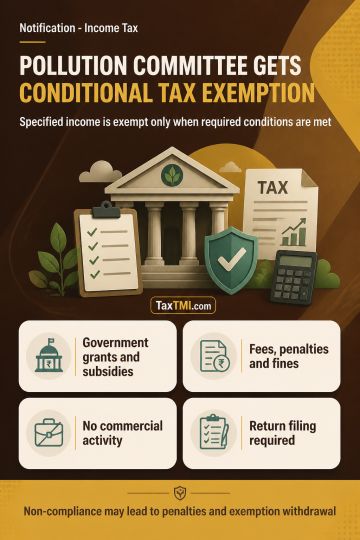
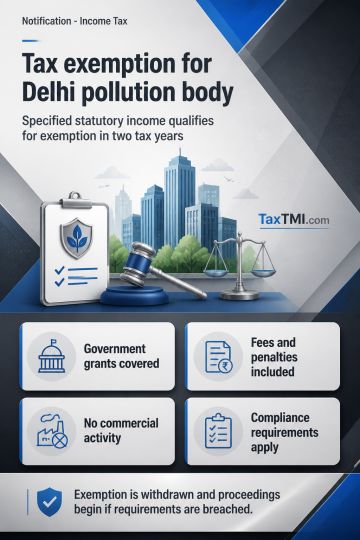
Specified income tax exemption for pollution control body remains conditional on non-commercial activity, unchanged income character, and return filin...
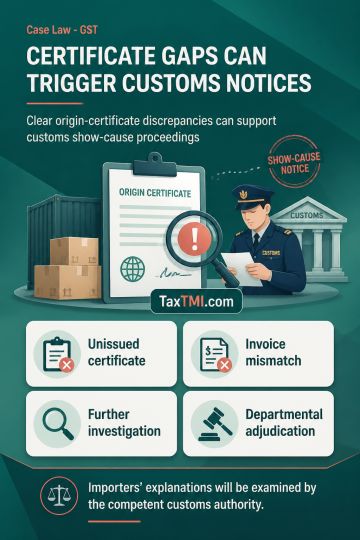
Jurisdictional facts in certificate-of-origin discrepancies can support customs show-cause proceedings, leaving factual explanations for departmental ...
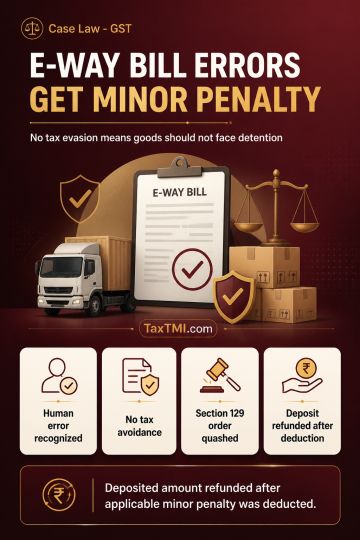
Levy of penalty @200% - e-way bill which was generated by the appellant had expired and at the time when the vehicle was intercepted four days had lapsed - The High Court acknowledged that penalties should not be imposed without considering mens rea. While the statute allows for a penalty of 200%, it does not absolve authorities from considering circumstances and intentions. Despite the expiration of the e-way bill, the Court found that the appellant's failure to extend the validity was a crucial factor. However, it noted that the penalty was calculated on a higher value than the invoice, indicating arbitrariness on the part of the authorities. Ultimately, the Court partially allowed the appeal, imposing a reduced penalty but refrained from completely exonerating the appellant.
Levy of penalty @200% - e-way bill which was generated by the appellant had expired and at the time when the vehicle was intercepted four days had lapsed - The High Court acknowledged that penalties should not be imposed without considering mens rea. While the statute allows for a penalty of 200%, it does not absolve authorities from considering circumstances and intentions. Despite the expiration of the e-way bill, the Court found that the appellant's failure to extend the validity was a crucial factor. However, it noted that the penalty was calculated on a higher value than the invoice, indicating arbitrariness on the part of the authorities. Ultimately, the Court partially allowed the appeal, imposing a reduced penalty but refrained from completely exonerating the appellant.
Note: It is a system-generated summary and is for quick reference only.
 TaxTMI
 of 4792





 Join Channel


 TaxTMI