Section 80P deduction covers Souharda credit societies, including qualifying surplus-deposit interest, subject to member KYC verification for cash dep...
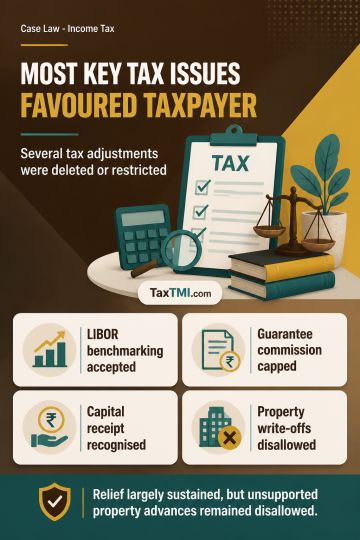
Transfer-pricing benchmarking and capital-receipt principles sustained taxpayer relief, while unsupported property-advance write-offs remained disallo...
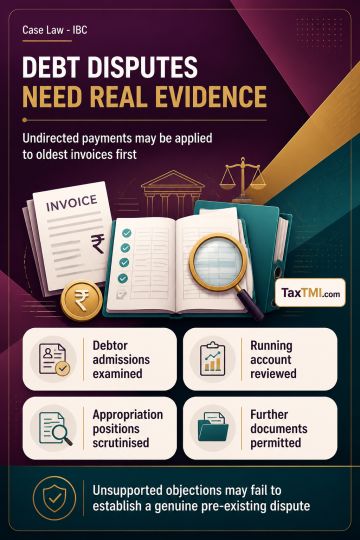
Pre-existing operational debt disputes require genuine evidence, while undirected running-account payments may be appropriated on a first-in-first-out...
Agency in CNG distribution makes outlet operators commission agents, rendering taxable Business Auxiliary Service rather than purchasing goods for res...
Page of 4790
Press 'Enter' after typing page number.
741 to 760 of 95794 Results
❮
❯
❯❯
0 / 200
Expand Note
Add to Folder
No Folders have been created
+
Are you sure you want to delete "My most important" ?
Levy of penalty @200% - e-way bill which was generated by the appellant had expired and at the time when the vehicle was intercepted four days had lapsed - The High Court acknowledged that penalties should not be imposed without considering mens rea. While the statute allows for a penalty of 200%, it does not absolve authorities from considering circumstances and intentions. Despite the expiration of the e-way bill, the Court found that the appellant's failure to extend the validity was a crucial factor. However, it noted that the penalty was calculated on a higher value than the invoice, indicating arbitrariness on the part of the authorities. Ultimately, the Court partially allowed the appeal, imposing a reduced penalty but refrained from completely exonerating the appellant.
Levy of penalty @200% - e-way bill which was generated by the appellant had expired and at the time when the vehicle was intercepted four days had lapsed - The High Court acknowledged that penalties should not be imposed without considering mens rea. While the statute allows for a penalty of 200%, it does not absolve authorities from considering circumstances and intentions. Despite the expiration of the e-way bill, the Court found that the appellant's failure to extend the validity was a crucial factor. However, it noted that the penalty was calculated on a higher value than the invoice, indicating arbitrariness on the part of the authorities. Ultimately, the Court partially allowed the appeal, imposing a reduced penalty but refrained from completely exonerating the appellant.
Note: It is a system-generated summary and is for quick reference only.
 TaxTMI
 of 4790









 Join Channel


 TaxTMI