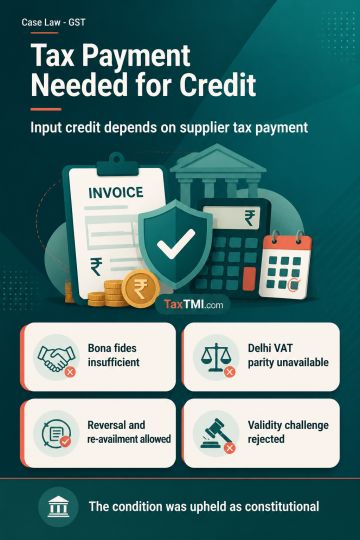
Input tax credit conditions remain constitutionally valid, with eligible recipient claims considered under GST circulars and retrospective filing dead...
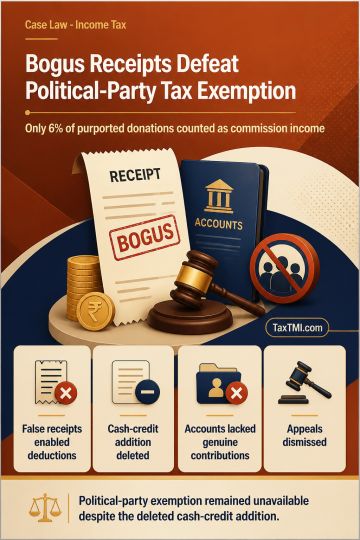
Bogus donation receipts justified commission income assessment and defeated political-party tax exemption for inaccurate accounts and reporting failur...
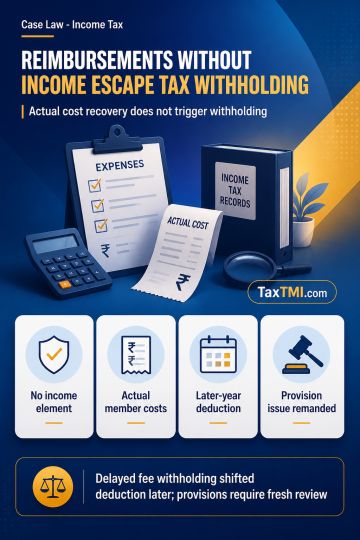
Pure reimbursement without income element escapes tax withholding, while delayed withholding and unsupported provisions face deferred or renewed scrut...
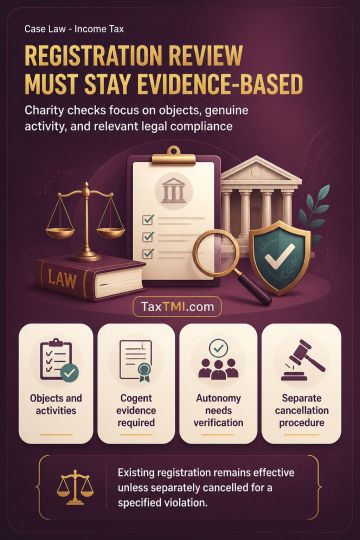
Public benefit requirement defeats charitable registration where residents' association services are reciprocal, member-only facilities governed by mu...
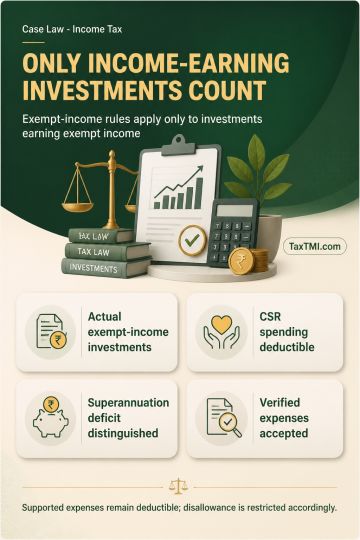
Exempt-income expenditure disallowance is confined to investments that actually generated exempt income, while supported business expenses remain dedu...
Levy of penalty @200% - e-way bill which was generated by the appellant had expired and at the time when the vehicle was intercepted four days had lapsed - The High Court acknowledged that penalties should not be imposed without considering mens rea. While the statute allows for a penalty of 200%, it does not absolve authorities from considering circumstances and intentions. Despite the expiration of the e-way bill, the Court found that the appellant's failure to extend the validity was a crucial factor. However, it noted that the penalty was calculated on a higher value than the invoice, indicating arbitrariness on the part of the authorities. Ultimately, the Court partially allowed the appeal, imposing a reduced penalty but refrained from completely exonerating the appellant.
Levy of penalty @200% - e-way bill which was generated by the appellant had expired and at the time when the vehicle was intercepted four days had lapsed - The High Court acknowledged that penalties should not be imposed without considering mens rea. While the statute allows for a penalty of 200%, it does not absolve authorities from considering circumstances and intentions. Despite the expiration of the e-way bill, the Court found that the appellant's failure to extend the validity was a crucial factor. However, it noted that the penalty was calculated on a higher value than the invoice, indicating arbitrariness on the part of the authorities. Ultimately, the Court partially allowed the appeal, imposing a reduced penalty but refrained from completely exonerating the appellant.
Note: It is a system-generated summary and is for quick reference only.
 TaxTMI
 of 4782




 Join Channel


 TaxTMI