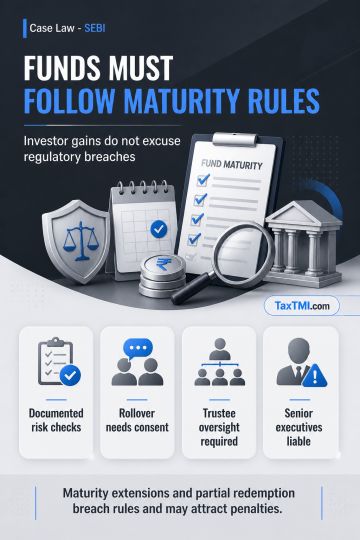
Mutual fund maturity rules require proper rollover, redemption, disclosure, and due diligence; investor gains cannot excuse regulatory breaches or pen...
Threshold exemption excludes exempt services, while stamp-paper purchases avoid reverse charge; consequential service tax penalties were also set asid...
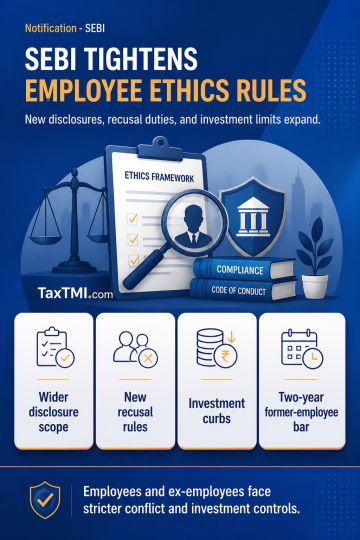
Employee conflict disclosures and investment restrictions expand with new recusal duties, post-employment limits, and compliance reporting requirement...
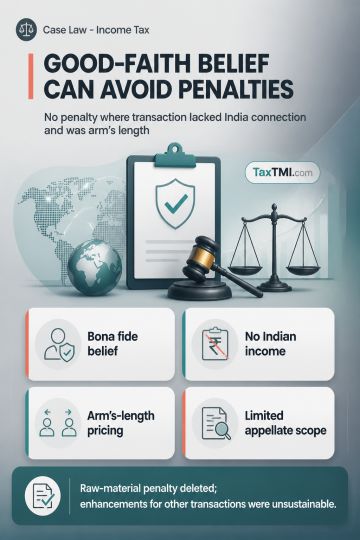
Penalty u/s. 271(1)(c) - Referring to a precedent set by the Hon’ble Supreme Court in CIT vs. Suresh Chandra Mittal, the Tribunal emphasized that when an assessee voluntarily discloses additional income to resolve tax disputes, such disclosure should be considered bona fide. - The Tribunal observed that the vouchers for the purchases were self-made and subsequently treated as bogus by the AO. It concluded that this situation mirrored the circumstances in the Suresh Chandra Mittal case, where penalties were canceled due to the assessee's bona fide explanation. Consequently, the Tribunal deleted the penalties imposed by the AO.
Penalty u/s. 271(1)(c) - Referring to a precedent set by the Hon’ble Supreme Court in CIT vs. Suresh Chandra Mittal, the Tribunal emphasized that when an assessee voluntarily discloses additional income to resolve tax disputes, such disclosure should be considered bona fide. - The Tribunal observed that the vouchers for the purchases were self-made and subsequently treated as bogus by the AO. It concluded that this situation mirrored the circumstances in the Suresh Chandra Mittal case, where penalties were canceled due to the assessee's bona fide explanation. Consequently, the Tribunal deleted the penalties imposed by the AO.
Note: It is a system-generated summary and is for quick reference only.
 TaxTMI
 of 4800












 Join Channel


 TaxTMI