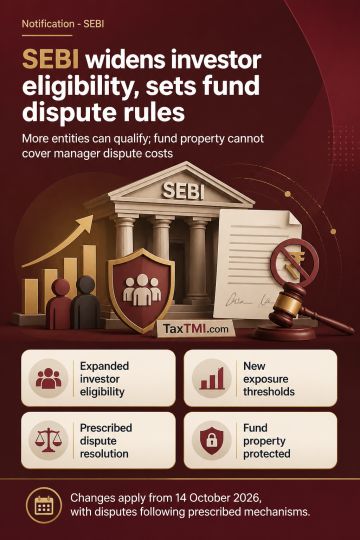
Accredited investor eligibility expands through securities-market exposure, while alternative investment fund disputes require prescribed resolution a...
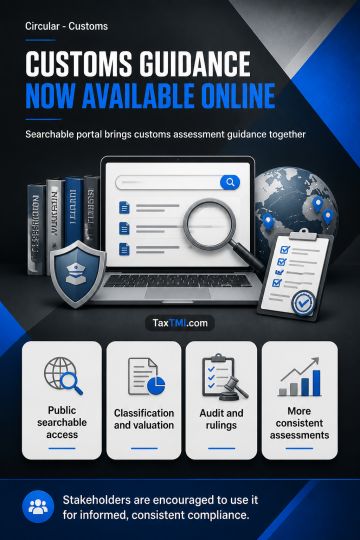
Customs Assessment Portal centralises classification and valuation guidance to support consistent, transparent and informed compliance across stakehol...
Recovery of wrongly utilized credit - utilization of Cenvat Credit availed on Basic Excise Duty (BED) for payment of EC and SHEC - Period between April 2013 and January 2014 - The tribunal found that the EC and SHEC, while not traditionally excise duties under the Central Excise Act, are considered excise duties when it comes to the utilization of Cenvat Credit for payment. The tribunal followed the pivotal case of M/s. Vedanta Ltd. vs CCE, where it was held that EC and SHEC could be treated as excise duties for the purpose of CENVAT credit utilization.
Recovery of wrongly utilized credit - utilization of Cenvat Credit availed on Basic Excise Duty (BED) for payment of EC and SHEC - Period between April 2013 and January 2014 - The tribunal found that the EC and SHEC, while not traditionally excise duties under the Central Excise Act, are considered excise duties when it comes to the utilization of Cenvat Credit for payment. The tribunal followed the pivotal case of M/s. Vedanta Ltd. vs CCE, where it was held that EC and SHEC could be treated as excise duties for the purpose of CENVAT credit utilization.
Note: It is a system-generated summary and is for quick reference only.
 TaxTMI
  TaxTMI
 of 4921