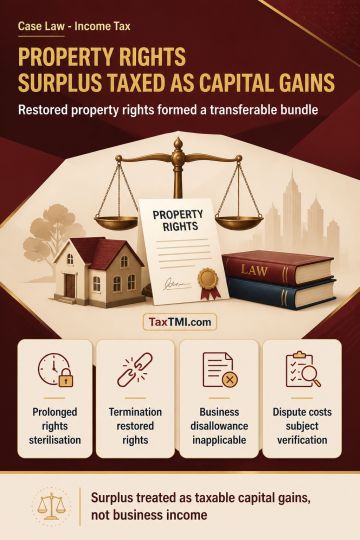
Prolonged sterilisation of development rights supports capital-gains treatment, while business-income disallowances cannot govern capital-gains comput...
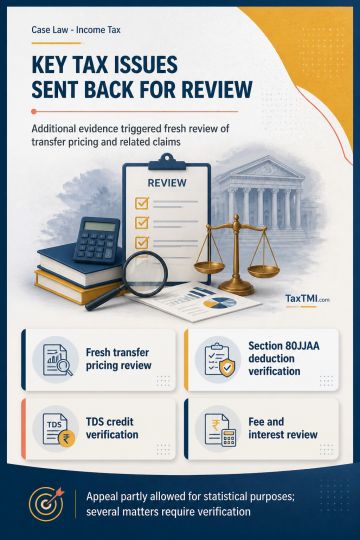
Additional evidence in transfer pricing dispute leads to fresh examination, while tax deductions, TDS credit, fee and refund interest require verifica...
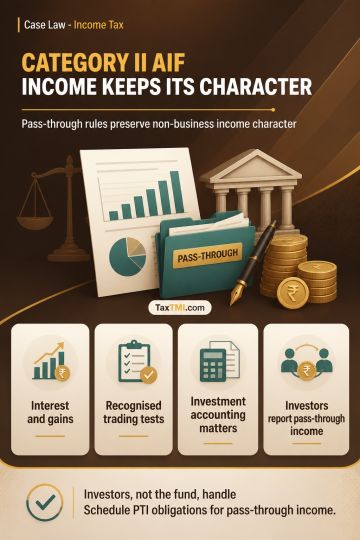
Category II AIF pass-through taxation preserves non-business income character; investment receipts cannot be reclassified without applying recognised ...
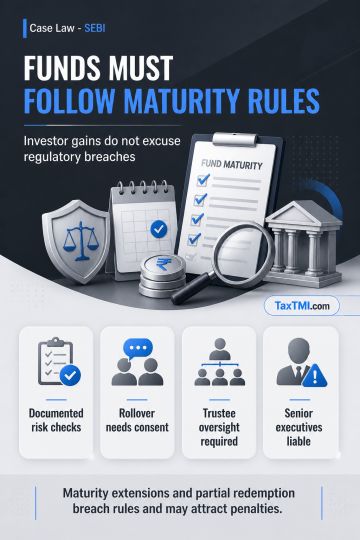
Mutual fund maturity rules require proper rollover, redemption, disclosure, and due diligence; investor gains cannot excuse regulatory breaches or pen...
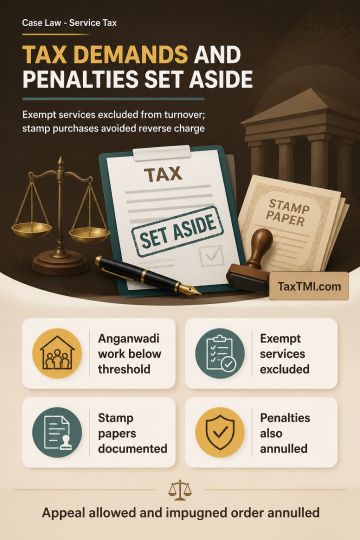
Threshold exemption excludes exempt services, while stamp-paper purchases avoid reverse charge; consequential service tax penalties were also set asid...
Constitutional Validity of Sections 2, 9, 12 and 18 of the Constitution (101st Amendment) Act, 2016 violating the basic structure of the Constitution of India - grounds raised are based on the constitution of a Goods and Services Tax Council (GST Council) - In its judgment, the High Court scrutinizes the petitioner's locus standi, emphasizing the necessity of demonstrating aggrievement in PILs. Despite the petitioner's assertion of public interest, the court finds that they lack standing, as they have not suffered any legal injury or prejudice resulting from the impugned provisions. Additionally, the court highlights the petitioner's absence of registration under GST enactments or involvement in commercial activities, further undermining their standing. - Ultimately, the High Court dismisses the writ petition, concluding that there is no basis to entertain it.
Constitutional Validity of Sections 2, 9, 12 and 18 of the Constitution (101st Amendment) Act, 2016 violating the basic structure of the Constitution of India - grounds raised are based on the constitution of a Goods and Services Tax Council (GST Council) - In its judgment, the High Court scrutinizes the petitioner's locus standi, emphasizing the necessity of demonstrating aggrievement in PILs. Despite the petitioner's assertion of public interest, the court finds that they lack standing, as they have not suffered any legal injury or prejudice resulting from the impugned provisions. Additionally, the court highlights the petitioner's absence of registration under GST enactments or involvement in commercial activities, further undermining their standing. - Ultimately, the High Court dismisses the writ petition, concluding that there is no basis to entertain it.
Note: It is a system-generated summary and is for quick reference only.
 TaxTMI
 of 4805









 Join Channel


 TaxTMI
