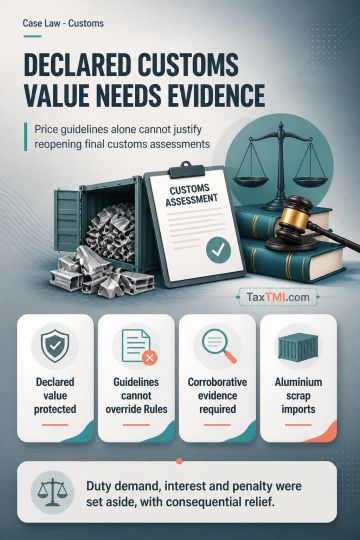
Transaction value cannot be rejected solely on non-statutory valuation guidelines without corroborative evidence supporting reassessment of final cust...
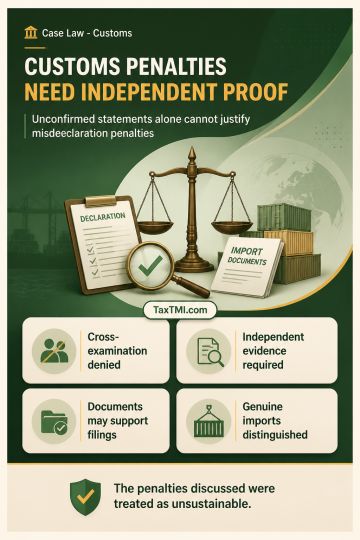
Cross-examination rights and corroborated evidence limit customs penalties for misdeclaration in genuine import transactions involving documented clea...
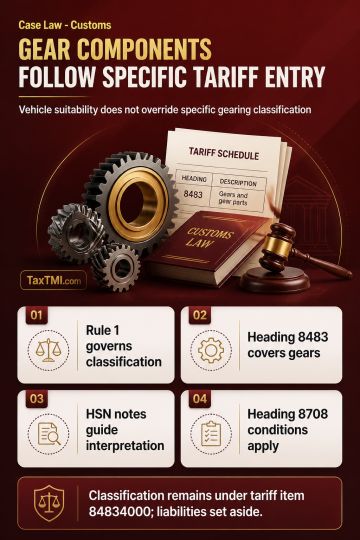
Tariff classification of vehicle gear components follows the specific gearing entry, displacing motor-vehicle parts classification and related liabili...
Necessary-party requirements limit impleadment of independent entities, while deferred consideration does not create an appealable adverse determinati...
Food supplement classification requires common parlance and authoritative tests, preventing treatment as proprietary Ayurvedic medicines without suppo...
Constitutional Validity of Sections 2, 9, 12 and 18 of the Constitution (101st Amendment) Act, 2016 violating the basic structure of the Constitution of India - grounds raised are based on the constitution of a Goods and Services Tax Council (GST Council) - In its judgment, the High Court scrutinizes the petitioner's locus standi, emphasizing the necessity of demonstrating aggrievement in PILs. Despite the petitioner's assertion of public interest, the court finds that they lack standing, as they have not suffered any legal injury or prejudice resulting from the impugned provisions. Additionally, the court highlights the petitioner's absence of registration under GST enactments or involvement in commercial activities, further undermining their standing. - Ultimately, the High Court dismisses the writ petition, concluding that there is no basis to entertain it.
Constitutional Validity of Sections 2, 9, 12 and 18 of the Constitution (101st Amendment) Act, 2016 violating the basic structure of the Constitution of India - grounds raised are based on the constitution of a Goods and Services Tax Council (GST Council) - In its judgment, the High Court scrutinizes the petitioner's locus standi, emphasizing the necessity of demonstrating aggrievement in PILs. Despite the petitioner's assertion of public interest, the court finds that they lack standing, as they have not suffered any legal injury or prejudice resulting from the impugned provisions. Additionally, the court highlights the petitioner's absence of registration under GST enactments or involvement in commercial activities, further undermining their standing. - Ultimately, the High Court dismisses the writ petition, concluding that there is no basis to entertain it.
Note: It is a system-generated summary and is for quick reference only.
 TaxTMI
 of 4801















 Join Channel


 TaxTMI
