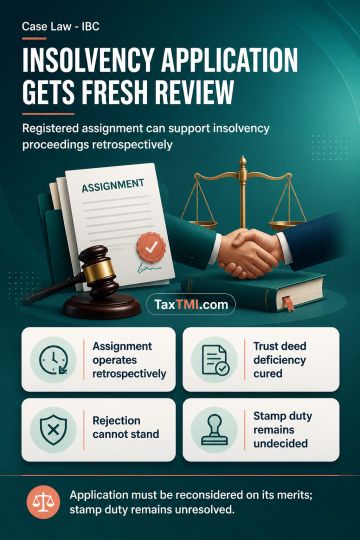
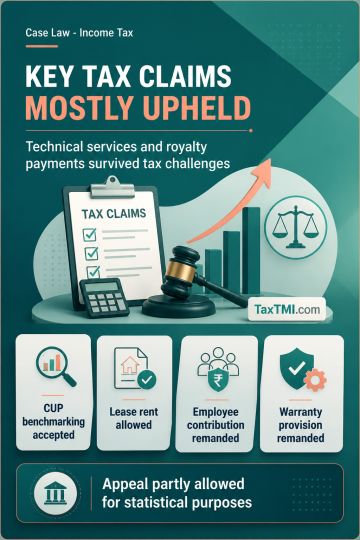
Transfer pricing and tax deductions upheld on established principles, while employee contributions and warranty provisions returned for fresh examinat...
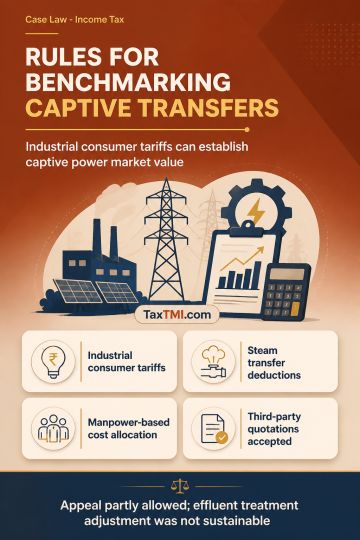
Captive transfer pricing relies on industrial consumer tariffs, while genuine quotations can benchmark effluent treatment transfers under the Other Me...
Specific tariff classification for ophthalmic instruments and extended limitation principles determine the treatment of duty demands, confiscation, an...
Integrated golf function determines classification, placing launch monitors and simulators under other golf equipment rather than measuring instrument...
Public servant status under anti-corruption law extends to recognised stock exchange leadership; constitutional and sanction challenges do not succeed...
Acquiescence, homebuyer protection and clean-slate resolution principles prevent landowners from disrupting an integrated project through late termina...
Insolvency and BankruptcyApril 22, 2024Case LawsAT
Release of assets (machines) seized by the Customs Authorities before initiation of CIRP - The tribunal found that the goods were lawfully confiscated under the Customs Act before the initiation of the CIRP. Therefore, the goods were no longer the property of the Corporate Debtor by the time the RP sought their release. It was noted that the order for confiscation was made after a proper show-cause notice and was not contested by the Corporate Debtor at that time. - The tribunal clarified that the ownership of the confiscated goods vested with the government immediately upon confiscation, irrespective of whether the redemption fine was paid. The option to redeem the goods by paying the fine was a separate matter that did not affect the fundamental status of ownership transfer upon confiscation.
Release of assets (machines) seized by the Customs Authorities before initiation of CIRP - The tribunal found that the goods were lawfully confiscated under the Customs Act before the initiation of the CIRP. Therefore, the goods were no longer the property of the Corporate Debtor by the time the RP sought their release. It was noted that the order for confiscation was made after a proper show-cause notice and was not contested by the Corporate Debtor at that time. - The tribunal clarified that the ownership of the confiscated goods vested with the government immediately upon confiscation, irrespective of whether the redemption fine was paid. The option to redeem the goods by paying the fine was a separate matter that did not affect the fundamental status of ownership transfer upon confiscation.
Note: It is a system-generated summary and is for quick reference only.
 TaxTMI
 of 4805














 Join Channel


 TaxTMI