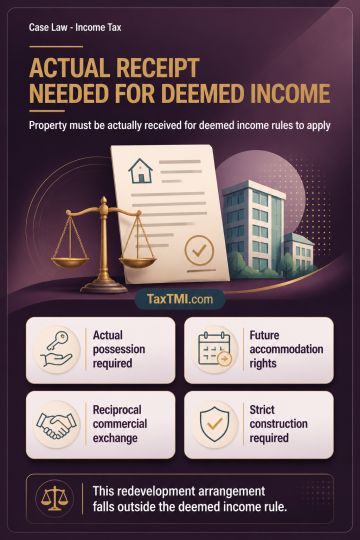
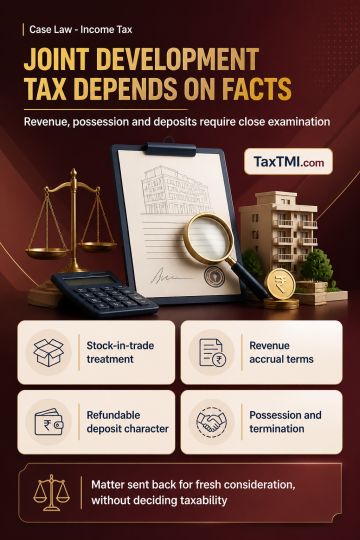
Receipt of immovable property requires actual possession or enjoyment; redevelopment allotments exchanged for tenancy rights fall outside deemed incom...
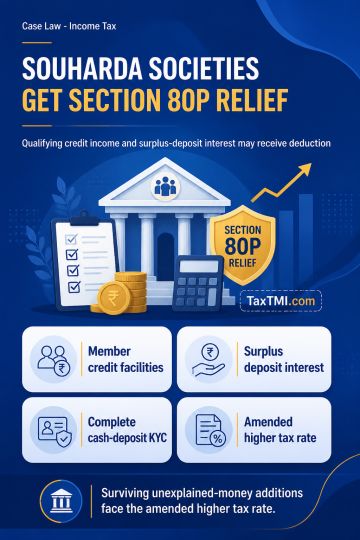
Section 80P deduction covers Souharda credit societies, including qualifying surplus-deposit interest, subject to member KYC verification for cash dep...
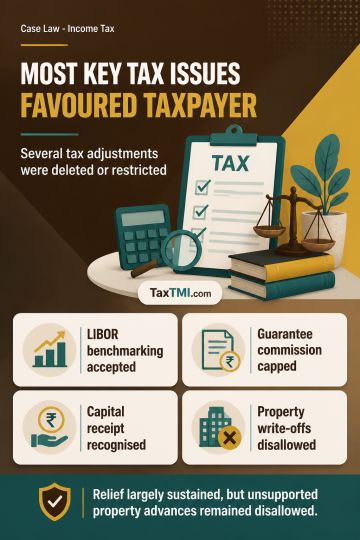
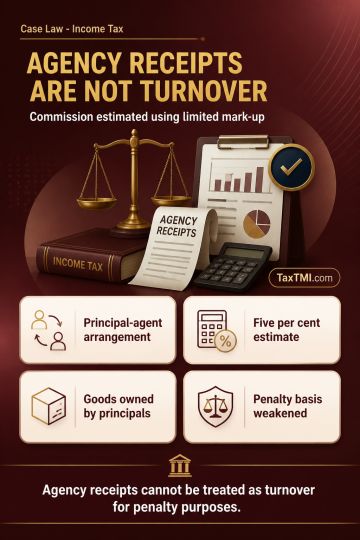
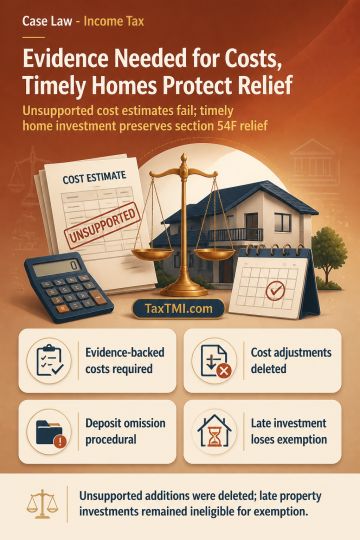
Transfer-pricing benchmarking and capital-receipt principles sustained taxpayer relief, while unsupported property-advance write-offs remained disallo...
Page of 4801
Press 'Enter' after typing page number.
941 to 960 of 96001 Results
❮
❯
❯❯
0 / 200
Expand Note
Add to Folder
No Folders have been created
+
Are you sure you want to delete "My most important" ?
Seeking grant of anticipatory bail - bailable offence or not - failure to make payment of tax - wilful attempt to evade any tax or payment of any tax - The applicant argued that the primary issue was tax evasion under MVAT, citing ongoing insolvency proceedings against a debtor as the reason for non-payment of taxes. - The High Court acknowledged the serious allegations of tax evasion and misappropriation, noting the substantial amount involved and the importance of custodial interrogation for a thorough investigation. - After analyzing relevant legal provisions and precedent cases, the Court concluded that the defendant could be prosecuted under both MVAT and IPC for the same set of facts. It cited Section 26 of the General Clauses Act to support this interpretation.
Seeking grant of anticipatory bail - bailable offence or not - failure to make payment of tax - wilful attempt to evade any tax or payment of any tax - The applicant argued that the primary issue was tax evasion under MVAT, citing ongoing insolvency proceedings against a debtor as the reason for non-payment of taxes. - The High Court acknowledged the serious allegations of tax evasion and misappropriation, noting the substantial amount involved and the importance of custodial interrogation for a thorough investigation. - After analyzing relevant legal provisions and precedent cases, the Court concluded that the defendant could be prosecuted under both MVAT and IPC for the same set of facts. It cited Section 26 of the General Clauses Act to support this interpretation.
Note: It is a system-generated summary and is for quick reference only.
 TaxTMI
 of 4801








 Join Channel


 TaxTMI