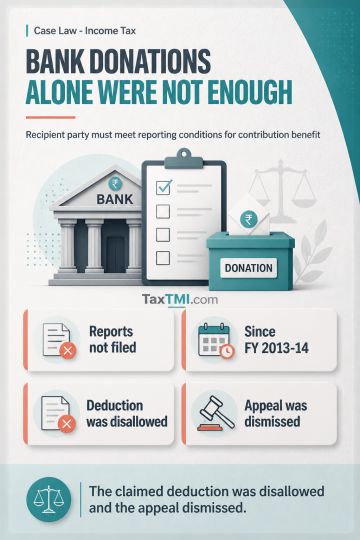
Political contribution deductions require recipient party compliance with contribution-reporting conditions; banking-channel donations alone do not qu...
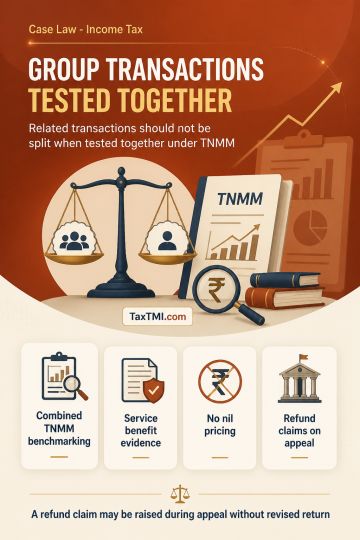
Aggregation under TNMM prevents selective testing of intra-group services without comparable uncontrolled transactions, while appellate additional cla...
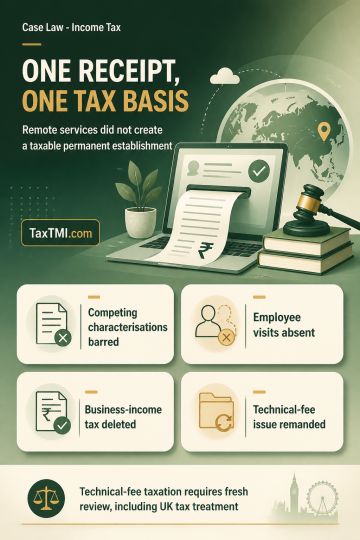
Protective assessment cannot duplicate identical receipts under competing characterisations; remote services did not establish a taxable permanent est...
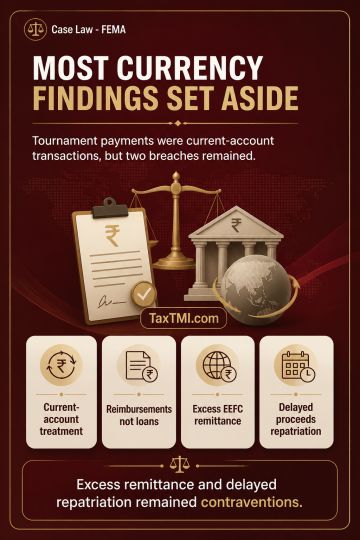
Current account treatment of overseas tournament services removed most FEMA findings, but excess EEFC remittance and delayed repatriation remained bre...
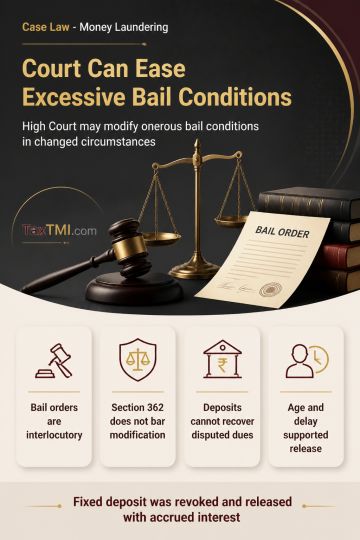
Modification of bail conditions remains available through inherent jurisdiction where onerous deposits undermine justice and cannot recover disputed d...
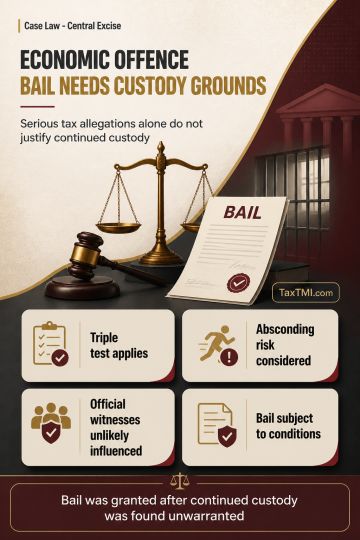
Seeking grant of anticipatory bail - bailable offence or not - failure to make payment of tax - wilful attempt to evade any tax or payment of any tax - The applicant argued that the primary issue was tax evasion under MVAT, citing ongoing insolvency proceedings against a debtor as the reason for non-payment of taxes. - The High Court acknowledged the serious allegations of tax evasion and misappropriation, noting the substantial amount involved and the importance of custodial interrogation for a thorough investigation. - After analyzing relevant legal provisions and precedent cases, the Court concluded that the defendant could be prosecuted under both MVAT and IPC for the same set of facts. It cited Section 26 of the General Clauses Act to support this interpretation.
Seeking grant of anticipatory bail - bailable offence or not - failure to make payment of tax - wilful attempt to evade any tax or payment of any tax - The applicant argued that the primary issue was tax evasion under MVAT, citing ongoing insolvency proceedings against a debtor as the reason for non-payment of taxes. - The High Court acknowledged the serious allegations of tax evasion and misappropriation, noting the substantial amount involved and the importance of custodial interrogation for a thorough investigation. - After analyzing relevant legal provisions and precedent cases, the Court concluded that the defendant could be prosecuted under both MVAT and IPC for the same set of facts. It cited Section 26 of the General Clauses Act to support this interpretation.
Note: It is a system-generated summary and is for quick reference only.
 TaxTMI
 of 4796







 Join Channel


 TaxTMI
