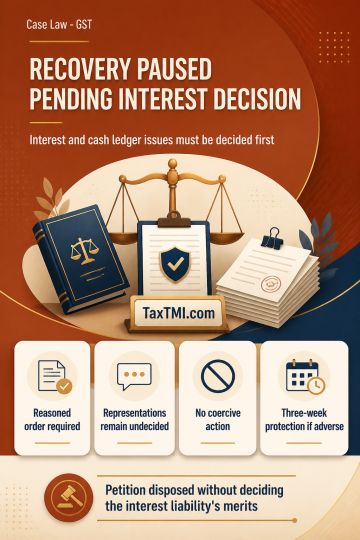
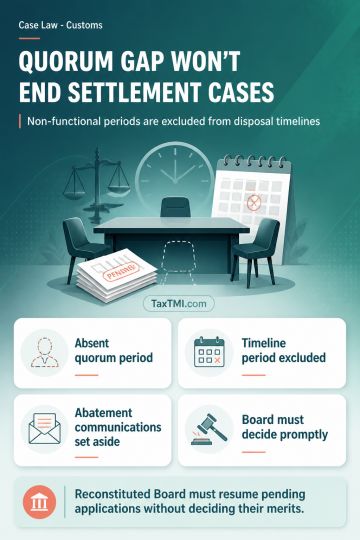
Institutional incapacity in customs settlement proceedings excludes non-functional quorum periods from statutory disposal timelines, preventing automa...
Interactive touchscreen panels with integrated computing functions fall under automatic data-processing machines rather than display monitors for cust...
Ex parte injunction service requirements were substantially met, while civil recovery and SFIO investigation into provident fund defalcation continued...
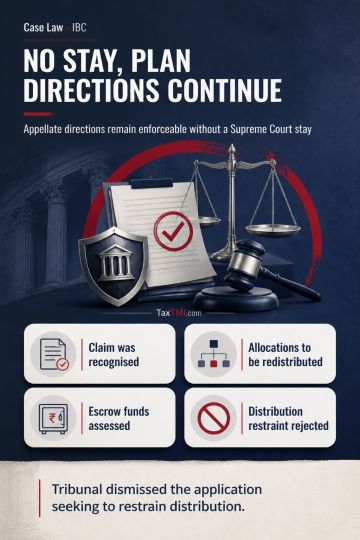
Enforcement of resolution-plan directions continues without a Supreme Court stay, preventing suspension of redistribution and escrowed-fund distributi...
Third-party ownership claims over attached property require Special Court adjudication where purchasers lack registered sale deeds and bona fides rema...
Pure-agent reimbursements in clearing and forwarding services are excluded from taxable value when qualifying third-party payments are properly record...
Customs relief for Strait of Hormuz maritime disruptions remains available, with existing conditions continuing unchanged through the extended validit...
Grant of Regular Bail - Forged tax invoices - Non-existent ghost business entities - commission of offence u/s 132(1)(b)(c) & (l) of the OGST Act - The court acknowledged the severe impact of economic offenses but also reiterated the fundamental right to personal liberty as enshrined in the Constitution. The court noted that the trial was well underway with significant witness testimonies already on record, reducing the risk of evidence tampering. The accused had already been in custody for a considerable period, which the court viewed as potentially punitive and prejudicial to the rights of the accused. Ultimately, the court granted bail to the applicants, setting stringent financial conditions and imposing strict requirements to ensure their appearance at trial.
Grant of Regular Bail - Forged tax invoices - Non-existent ghost business entities - commission of offence u/s 132(1)(b)(c) & (l) of the OGST Act - The court acknowledged the severe impact of economic offenses but also reiterated the fundamental right to personal liberty as enshrined in the Constitution. The court noted that the trial was well underway with significant witness testimonies already on record, reducing the risk of evidence tampering. The accused had already been in custody for a considerable period, which the court viewed as potentially punitive and prejudicial to the rights of the accused. Ultimately, the court granted bail to the applicants, setting stringent financial conditions and imposing strict requirements to ensure their appearance at trial.
Note: It is a system-generated summary and is for quick reference only.
 TaxTMI
 of 4805















 Join Channel


 TaxTMI