Defined public benefit can retain charitable character; registration renewal requires examining genuine activities and legal compliance, not surplus a...
Capital reduction is distinct from share buy-back, preventing buy-back tax; restructuring interest and related business deductions also survive scruti...
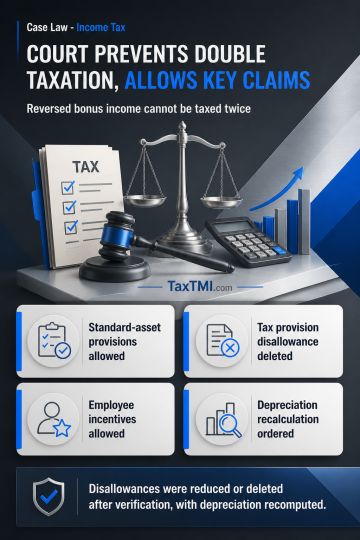
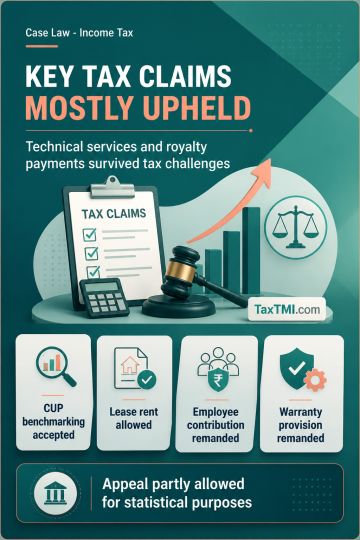
Transfer pricing and tax deductions upheld on established principles, while employee contributions and warranty provisions returned for fresh examinat...
Captive transfer pricing relies on industrial consumer tariffs, while genuine quotations can benchmark effluent treatment transfers under the Other Me...
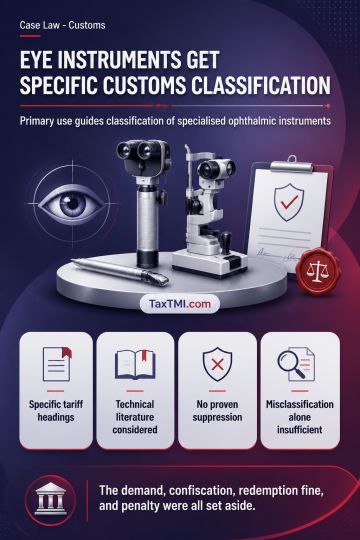
Specific tariff classification for ophthalmic instruments and extended limitation principles determine the treatment of duty demands, confiscation, an...
Recovery of tax arrears from the Former director of the Company - Attachment of Bank accounts - DIN of the petitioner got disqualified under Section 164(2)(a) of the Companies Act, 2013 - The High Court found that the attachment order was issued without proper consideration of the petitioner's status and without affording them an opportunity to present their case. The court held that this violated the petitioner's rights under Article 14 and 300A of the Constitution. - The High Court accepted the petitioner's argument that they had resigned from their directorship before the relevant period. As such, the court ruled that the petitioner could not be held liable for the company's tax dues during that period.
Recovery of tax arrears from the Former director of the Company - Attachment of Bank accounts - DIN of the petitioner got disqualified under Section 164(2)(a) of the Companies Act, 2013 - The High Court found that the attachment order was issued without proper consideration of the petitioner's status and without affording them an opportunity to present their case. The court held that this violated the petitioner's rights under Article 14 and 300A of the Constitution. - The High Court accepted the petitioner's argument that they had resigned from their directorship before the relevant period. As such, the court ruled that the petitioner could not be held liable for the company's tax dues during that period.
Note: It is a system-generated summary and is for quick reference only.
 TaxTMI
 of 4805









 Join Channel


 TaxTMI