Opportunity to respond to jurisdictional reports is mandatory before customs settlement duty enhancement; connected applications require consistent ad...
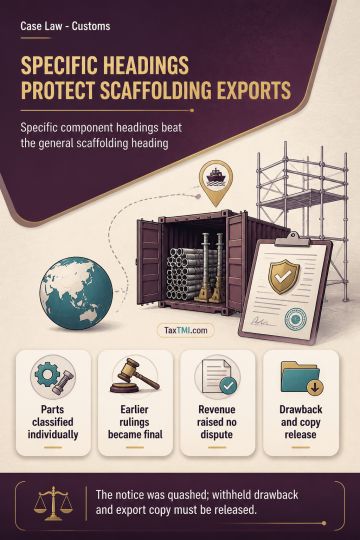
Specific customs headings for scaffolding components prevail over general classification, invalidating misclassification proceedings and enabling with...
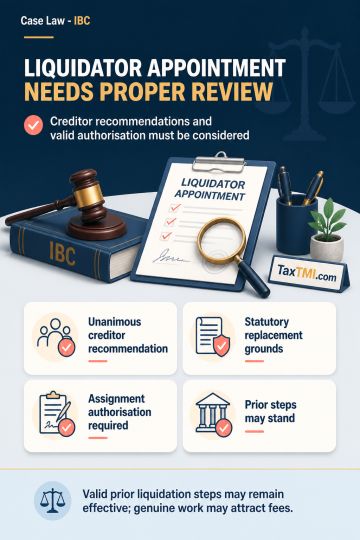
Liquidator appointment under Section 34 requires consideration of creditor recommendations, valid professional authorisation, and preservation of vali...
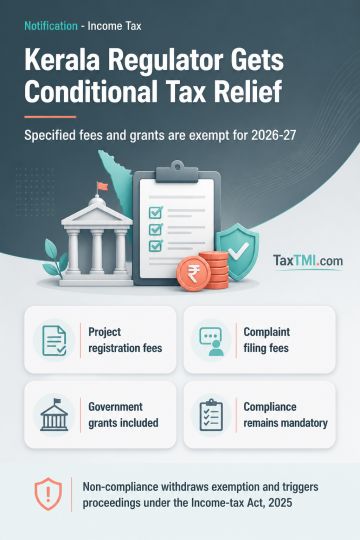
Income-tax exemption for specified regulatory fees and government grants applies subject to non-commercial activity and continuing compliance conditio...
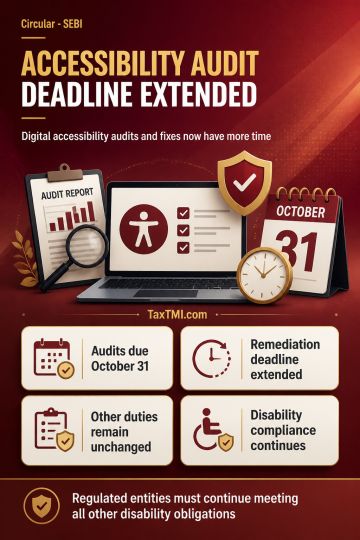
Digital accessibility audit and remediation deadlines extended, while all other disability-compliance obligations for regulated entities remain unchan...
Page of 4803
Press 'Enter' after typing page number.
621 to 640 of 96047 Results
❮
❯
❯❯
0 / 200
Expand Note
Add to Folder
No Folders have been created
+
Are you sure you want to delete "My most important" ?
Recovery of tax arrears from the Former director of the Company - Attachment of Bank accounts - DIN of the petitioner got disqualified under Section 164(2)(a) of the Companies Act, 2013 - The High Court found that the attachment order was issued without proper consideration of the petitioner's status and without affording them an opportunity to present their case. The court held that this violated the petitioner's rights under Article 14 and 300A of the Constitution. - The High Court accepted the petitioner's argument that they had resigned from their directorship before the relevant period. As such, the court ruled that the petitioner could not be held liable for the company's tax dues during that period.
Recovery of tax arrears from the Former director of the Company - Attachment of Bank accounts - DIN of the petitioner got disqualified under Section 164(2)(a) of the Companies Act, 2013 - The High Court found that the attachment order was issued without proper consideration of the petitioner's status and without affording them an opportunity to present their case. The court held that this violated the petitioner's rights under Article 14 and 300A of the Constitution. - The High Court accepted the petitioner's argument that they had resigned from their directorship before the relevant period. As such, the court ruled that the petitioner could not be held liable for the company's tax dues during that period.
Note: It is a system-generated summary and is for quick reference only.
 TaxTMI
 of 4803








 Join Channel


 TaxTMI