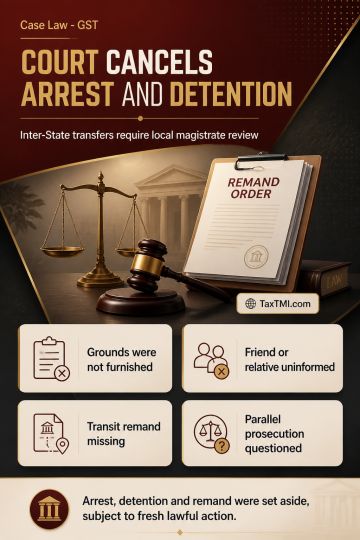
Arrest safeguards and transit remand requirements invalidated detention following inter-State transfer without communicated grounds or magistrate auth...
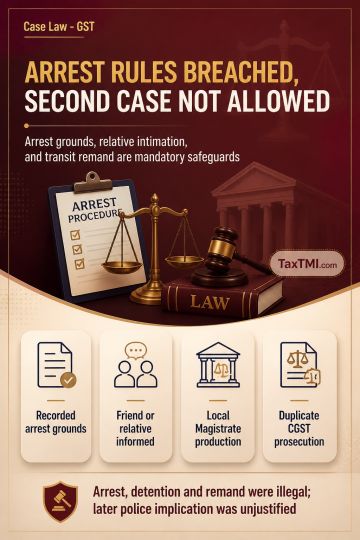
Arrest safeguards require disclosed grounds, relative intimation and transit remand, while duplicate prosecution under the CGST framework is unsustain...
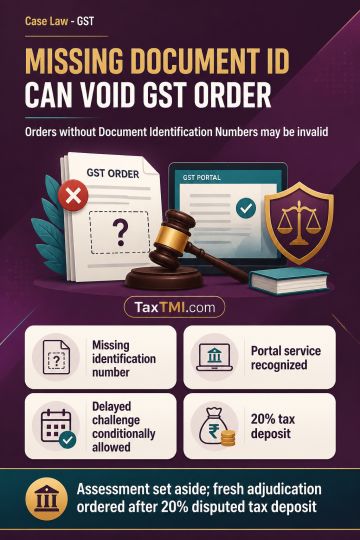
Document Identification Number defects can invalidate GST assessments, with delayed challenges entertained conditionally where patent irregularities e...
Windmill commissioning evidence supported higher depreciation where grid connection and electricity generation proved operational use before the relev...
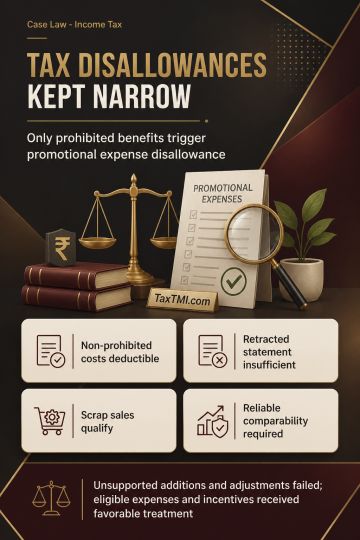
Pharmaceutical promotion and transfer-pricing comparability principles limited disallowances, while uncorroborated search allegations and unsupported ...
Business expenditure substantiation supports scrap credits, statutory payments and expense claims, while depreciation requires proof of actual busines...
Penalty under Rule 18 (1) of CBLR 2018 on customs broker - exporter availed undue benefit under Merchandise Exports from India Scheme (MEIS) in the export of safety matches - The Tribunal noted that while the appellant was accused of violating regulations 10(d) and 10(e) of CBLR 2018, it did not gain any direct benefit from the alleged violations. This lack of mens rea (intent) on the part of the appellant was a crucial factor in the decision-making process. The Tribunal emphasized that the classification of goods is a question of law and cannot be treated as misdeclaration or misstatement unless there is clear evidence of deliberate intent. - Ultimately, the Tribunal ruled in favor of the appellant, setting aside the penalty imposed and allowing the appeal.
Penalty under Rule 18 (1) of CBLR 2018 on customs broker - exporter availed undue benefit under Merchandise Exports from India Scheme (MEIS) in the export of safety matches - The Tribunal noted that while the appellant was accused of violating regulations 10(d) and 10(e) of CBLR 2018, it did not gain any direct benefit from the alleged violations. This lack of mens rea (intent) on the part of the appellant was a crucial factor in the decision-making process. The Tribunal emphasized that the classification of goods is a question of law and cannot be treated as misdeclaration or misstatement unless there is clear evidence of deliberate intent. - Ultimately, the Tribunal ruled in favor of the appellant, setting aside the penalty imposed and allowing the appeal.
Note: It is a system-generated summary and is for quick reference only.
 TaxTMI
 of 4792













 Join Channel


 TaxTMI