Transfer pricing and tax deductions upheld on established principles, while employee contributions and warranty provisions returned for fresh examinat...
Captive transfer pricing relies on industrial consumer tariffs, while genuine quotations can benchmark effluent treatment transfers under the Other Me...
Specific tariff classification for ophthalmic instruments and extended limitation principles determine the treatment of duty demands, confiscation, an...
Integrated golf function determines classification, placing launch monitors and simulators under other golf equipment rather than measuring instrument...
Public servant status under anti-corruption law extends to recognised stock exchange leadership; constitutional and sanction challenges do not succeed...
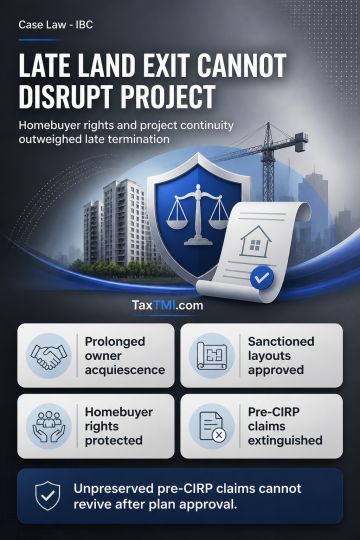
Acquiescence, homebuyer protection and clean-slate resolution principles prevent landowners from disrupting an integrated project through late termina...
Page of 4792
Press 'Enter' after typing page number.
1001 to 1020 of 95833 Results
❮
❯
❯❯
0 / 200
Expand Note
Add to Folder
No Folders have been created
+
Are you sure you want to delete "My most important" ?
Validity of Faceless Assessment - demand notice was issued without furnishing a draft order to the Petitioners, violating Section 144C(1) of the IT Act. - After considering submissions from both parties, the High court found merit in the petitioner's argument regarding non-compliance with statutory procedures. Consequently, the court quashed the impugned assessment order and notice. However, contrary to the petitioner's plea to conclude the matter there, the court opted to follow the approach established by the Supreme Court. The court ruled that while the assessment order was set aside, the department should be given an opportunity to rectify the procedural error and pass a fresh order in compliance with the law.
Validity of Faceless Assessment - demand notice was issued without furnishing a draft order to the Petitioners, violating Section 144C(1) of the IT Act. - After considering submissions from both parties, the High court found merit in the petitioner's argument regarding non-compliance with statutory procedures. Consequently, the court quashed the impugned assessment order and notice. However, contrary to the petitioner's plea to conclude the matter there, the court opted to follow the approach established by the Supreme Court. The court ruled that while the assessment order was set aside, the department should be given an opportunity to rectify the procedural error and pass a fresh order in compliance with the law.
Note: It is a system-generated summary and is for quick reference only.
 TaxTMI
 of 4792















 Join Channel


 TaxTMI