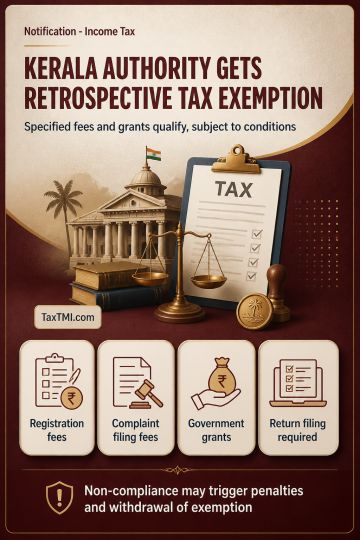
Tax exemption for regulatory authority income applies retrospectively, subject to non-commercial activity, unchanged income sources, and return filing...
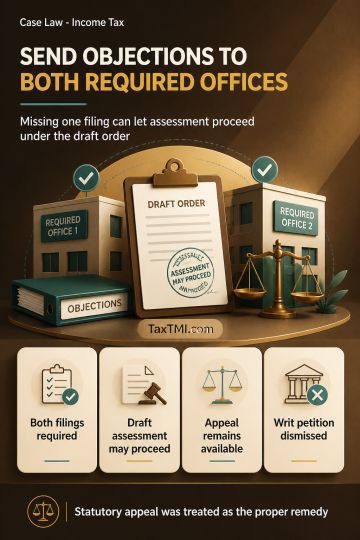
Dispute Resolution Panel objections must reach both prescribed forums; otherwise assessment may proceed and statutory appeal remains the proper remedy...
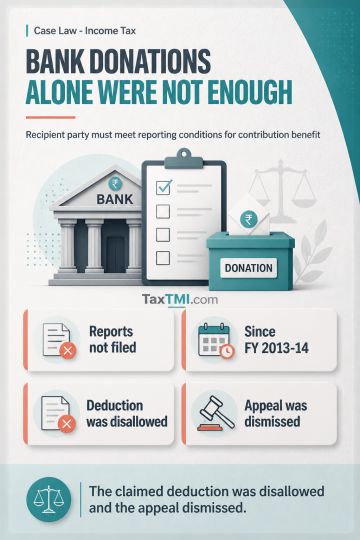
Political contribution deductions require recipient party compliance with contribution-reporting conditions; banking-channel donations alone do not qu...
Page of 4786
Press 'Enter' after typing page number.
341 to 360 of 95715 Results
❮
❯
❯❯
0 / 200
Expand Note
Add to Folder
No Folders have been created
+
Are you sure you want to delete "My most important" ?
Income tax proceedings against company dissolved / insolvent - Jurisdiction or authority to reopen or assess income for any period prior to the approval of the Resolution Plan - The High Court affirmed that once a Resolution Plan is approved under the IBC, it becomes binding on all stakeholders, including creditors and guarantors, extinguishing liabilities prior to its approval. Relying on Supreme Court judgments, the Court reiterated that the legislative intent behind Section 31 of the IBC is to provide a fresh start to the successful resolution applicant, safeguarding against surprise claims. The Court dismissed attempts to distinguish between voluntary and involuntary insolvency, emphasizing that the protection afforded under Section 31 applies uniformly.
Income tax proceedings against company dissolved / insolvent - Jurisdiction or authority to reopen or assess income for any period prior to the approval of the Resolution Plan - The High Court affirmed that once a Resolution Plan is approved under the IBC, it becomes binding on all stakeholders, including creditors and guarantors, extinguishing liabilities prior to its approval. Relying on Supreme Court judgments, the Court reiterated that the legislative intent behind Section 31 of the IBC is to provide a fresh start to the successful resolution applicant, safeguarding against surprise claims. The Court dismissed attempts to distinguish between voluntary and involuntary insolvency, emphasizing that the protection afforded under Section 31 applies uniformly.
Note: It is a system-generated summary and is for quick reference only.
 TaxTMI
 of 4786




 Join Channel


 TaxTMI