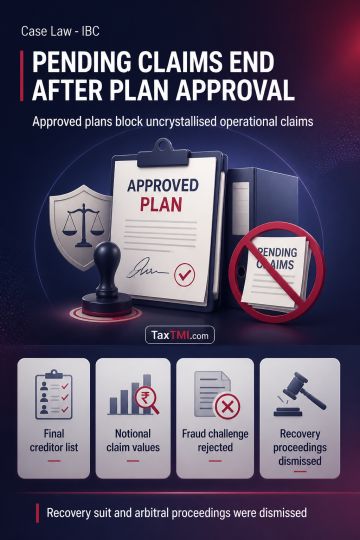
Clean slate principle extinguishes uncrystallised operational claims and bars continuation of pending recovery and arbitral proceedings after plan app...
Works contract classification governs composite layout-development contracts where VAT-paid goods are transferred alongside construction and infrastru...
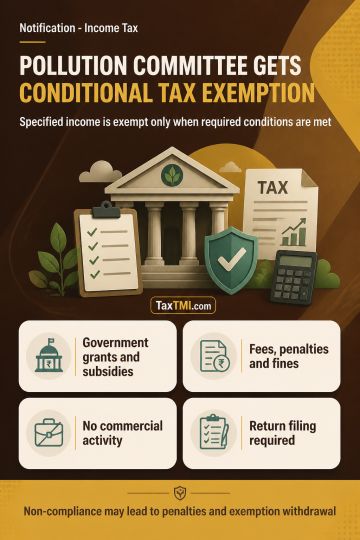
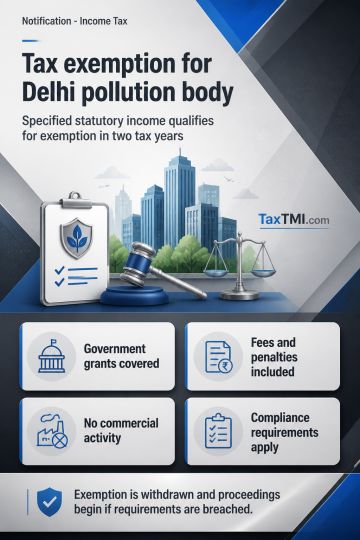
Specified income tax exemption for pollution control body remains conditional on non-commercial activity, unchanged income character, and return filin...
Dishonour of Cheque - Grant of Bail - Mandate to deposit of a minimum of twenty percent of the fine or compensation awarded by the trial court - While acknowledging the discretionary language of "may" in Section 148, the High Court interpreted it as a rule rather than an exception, aligning with the legislative intent to expedite legal proceedings. The High Court referenced previous Supreme Court judgments to support its interpretation of Section 148, emphasizing the necessity of complying with the legislative intent to prevent delays in cheque dishonor cases. - Consequently, the High Court modified the appellate court's order, directing the petitioner to deposit twenty percent of the fine imposed by the trial court within sixty days.
Dishonour of Cheque - Grant of Bail - Mandate to deposit of a minimum of twenty percent of the fine or compensation awarded by the trial court - While acknowledging the discretionary language of "may" in Section 148, the High Court interpreted it as a rule rather than an exception, aligning with the legislative intent to expedite legal proceedings. The High Court referenced previous Supreme Court judgments to support its interpretation of Section 148, emphasizing the necessity of complying with the legislative intent to prevent delays in cheque dishonor cases. - Consequently, the High Court modified the appellate court's order, directing the petitioner to deposit twenty percent of the fine imposed by the trial court within sixty days.
Note: It is a system-generated summary and is for quick reference only.
 TaxTMI
 of 4801






 Join Channel


 TaxTMI