Authentication of paper assessment orders upheld, while qualifying repairs, consumables and vendor advance write-offs remain deductible business claim...
Transaction value cannot be rejected solely on non-statutory valuation guidelines without corroborative evidence supporting reassessment of final cust...
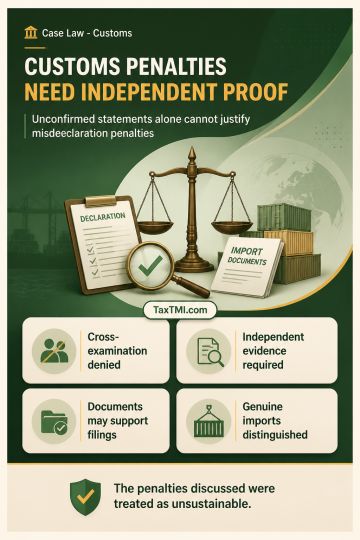
Cross-examination rights and corroborated evidence limit customs penalties for misdeclaration in genuine import transactions involving documented clea...
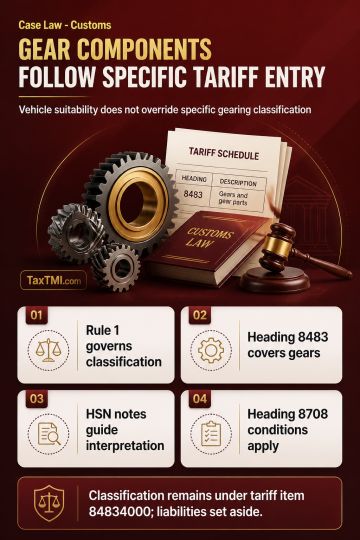
Tariff classification of vehicle gear components follows the specific gearing entry, displacing motor-vehicle parts classification and related liabili...
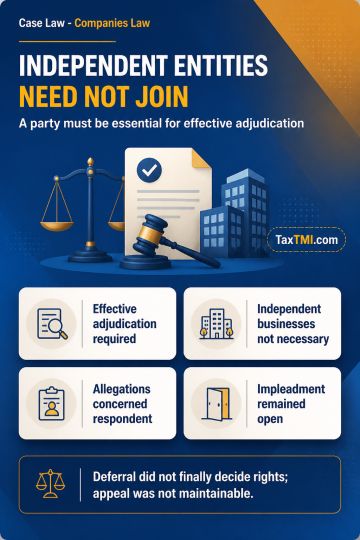
Necessary-party requirements limit impleadment of independent entities, while deferred consideration does not create an appealable adverse determinati...
Validity of assessment order - Violation of Stay Order against the operation of a notification extending the period of limitation - The High Court acknowledges the petitioner's contention regarding the stay order. It notes that the impugned order was indeed passed during the pendency of a stay against the operation of the notification extending the period of limitation. This is a violation of the stay order, constituting a procedural irregularity. - Regarding the jurisdictional conflict, the Court concluded that without notification for cross-empowerment, authorities from one jurisdiction cannot initiate proceedings against an assessee assigned to the other jurisdiction. Thus, the impugned order was quashed, with liberty given to the State authorities to proceed in accordance with established legal principles.
Validity of assessment order - Violation of Stay Order against the operation of a notification extending the period of limitation - The High Court acknowledges the petitioner's contention regarding the stay order. It notes that the impugned order was indeed passed during the pendency of a stay against the operation of the notification extending the period of limitation. This is a violation of the stay order, constituting a procedural irregularity. - Regarding the jurisdictional conflict, the Court concluded that without notification for cross-empowerment, authorities from one jurisdiction cannot initiate proceedings against an assessee assigned to the other jurisdiction. Thus, the impugned order was quashed, with liberty given to the State authorities to proceed in accordance with established legal principles.
Note: It is a system-generated summary and is for quick reference only.
 TaxTMI
 of 4803

















 Join Channel


 TaxTMI
