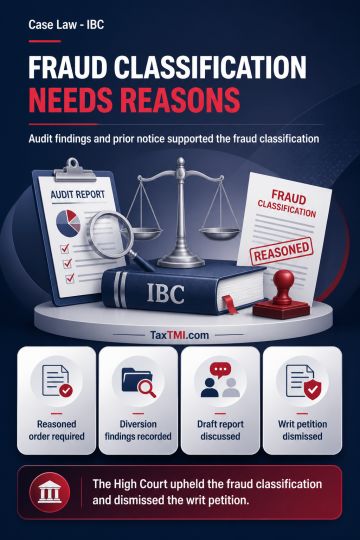
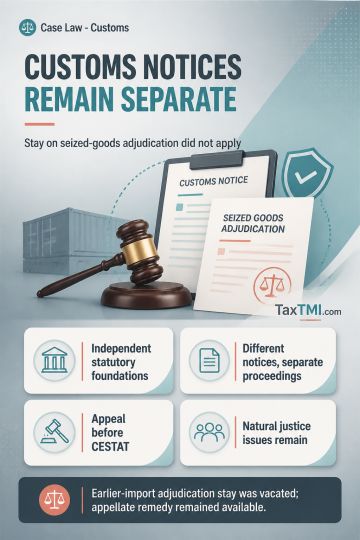
Independent show-cause notices remain separate proceedings, while customs adjudication challenges should ordinarily follow the statutory appellate rem...
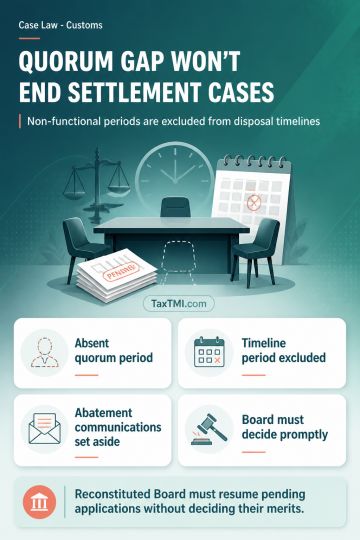
Institutional incapacity in customs settlement proceedings excludes non-functional quorum periods from statutory disposal timelines, preventing automa...
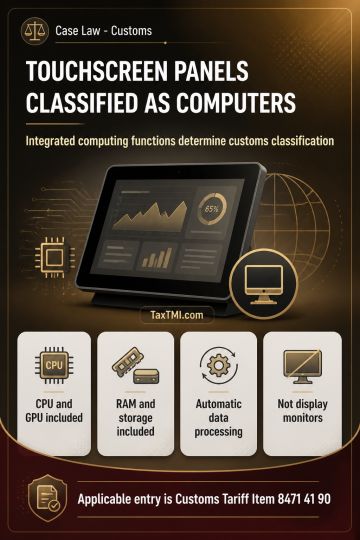
Interactive touchscreen panels with integrated computing functions fall under automatic data-processing machines rather than display monitors for cust...
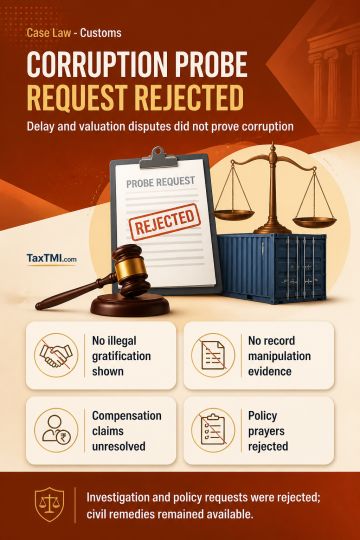
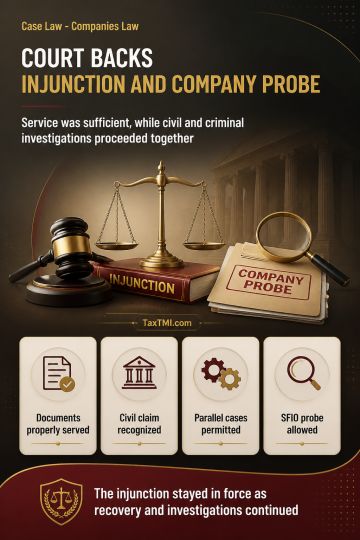
Ex parte injunction service requirements were substantially met, while civil recovery and SFIO investigation into provident fund defalcation continued...
Penalties u/s 112 and section 114AA of Customs Act, 1962 - classification of goods imported under duty exemption entitlement certificate (DEEC) scheme - The tribunal finds fault with the reclassification adopted in the impugned order, as it fails to specify the tariff item and associated rate of duty, as required by the Customs Act. Moreover, the tribunal highlights the lack of clarity in distinguishing between alloy and non-alloy steel and criticizes the simultaneous application of valuation rules, which runs counter to prescribed procedures. The tribunal concludes that the reclassification lacks legal validity. - Due to foundational lacunae and subsequent developments, the tribunal sets aside the order and directs a rehearing of the matter, allowing both parties to present their arguments afresh.
Penalties u/s 112 and section 114AA of Customs Act, 1962 - classification of goods imported under duty exemption entitlement certificate (DEEC) scheme - The tribunal finds fault with the reclassification adopted in the impugned order, as it fails to specify the tariff item and associated rate of duty, as required by the Customs Act. Moreover, the tribunal highlights the lack of clarity in distinguishing between alloy and non-alloy steel and criticizes the simultaneous application of valuation rules, which runs counter to prescribed procedures. The tribunal concludes that the reclassification lacks legal validity. - Due to foundational lacunae and subsequent developments, the tribunal sets aside the order and directs a rehearing of the matter, allowing both parties to present their arguments afresh.
Note: It is a system-generated summary and is for quick reference only.
 TaxTMI
 of 4800







 Join Channel


 TaxTMI