Statutory transfer formalities invalidated alleged share and property transfers, while retrospective record manipulation constituted oppression and mi...
Provisional attachment of laundered funds and equivalent-value property sustained, with statutory protection limited to pension, gratuity and providen...
Insolvency moratorium does not shield company officers from cheque dishonour prosecution for liability arising before corporate insolvency proceedings...
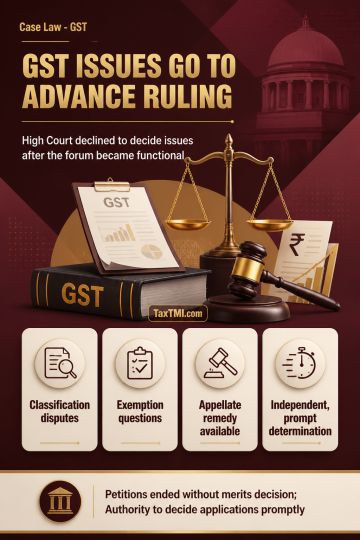
Advance-ruling mechanism governs pending GST classification, exemption and taxability disputes, limiting writ review once the specialised forum functi...
Page of 4805
Press 'Enter' after typing page number.
921 to 940 of 96092 Results
❮
❯
❯❯
0 / 200
Expand Note
Add to Folder
No Folders have been created
+
Are you sure you want to delete "My most important" ?
Insolvency and BankruptcyApril 17, 2024Case LawsAT
Rejection of application against admission of CIRP u/s 7 application filed by the Financial Creditor - The tribunal pointed out that the corporate debtor’s financial statements classified the received funds as unsecured borrowing, and payments were made from these funds as per the agreements which also envisaged repayment schedules, further affirming their nature as debt. Even though initial agreements suggested equity investment, subsequent financial treatments and the lack of fulfillment of these agreements led the tribunal to regard the funds as a loan. The arrangements made did not culminate in the acquisition of equity, nor were the projected investments completed as planned. The NCLAT upheld the Adjudicating Authority’s decision, confirming that the financial transactions in question constituted a financial debt and not equity investment.
Rejection of application against admission of CIRP u/s 7 application filed by the Financial Creditor - The tribunal pointed out that the corporate debtor’s financial statements classified the received funds as unsecured borrowing, and payments were made from these funds as per the agreements which also envisaged repayment schedules, further affirming their nature as debt. Even though initial agreements suggested equity investment, subsequent financial treatments and the lack of fulfillment of these agreements led the tribunal to regard the funds as a loan. The arrangements made did not culminate in the acquisition of equity, nor were the projected investments completed as planned. The NCLAT upheld the Adjudicating Authority’s decision, confirming that the financial transactions in question constituted a financial debt and not equity investment.
Note: It is a system-generated summary and is for quick reference only.
 TaxTMI
 of 4805













 Join Channel


 TaxTMI