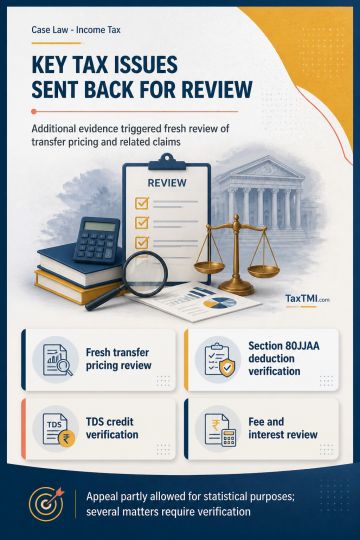
Additional evidence in transfer pricing dispute leads to fresh examination, while tax deductions, TDS credit, fee and refund interest require verifica...
Category II AIF pass-through taxation preserves non-business income character; investment receipts cannot be reclassified without applying recognised ...
Mutual fund maturity rules require proper rollover, redemption, disclosure, and due diligence; investor gains cannot excuse regulatory breaches or pen...
Threshold exemption excludes exempt services, while stamp-paper purchases avoid reverse charge; consequential service tax penalties were also set asid...
Employee conflict disclosures and investment restrictions expand with new recusal duties, post-employment limits, and compliance reporting requirement...
Maintainability of curative petition - restoration of arbitral award which had been set aside by the Division Bench of the High court on the ground that it suffered from patently illegality. - The Supreme Court found that invoking curative jurisdiction was justified to prevent a miscarriage of justice. It highlighted the circumstances under which curative petitions could be entertained, emphasizing cases where there is a gross miscarriage of justice or abuse of process. The Court reiterated that interference with arbitral awards should be minimal and only on grounds of patent illegality or perversity. It emphasized that an arbitral tribunal's decision should not be disturbed unless it is evident that a reasonable person could not have arrived at such a decision based on the evidence presented.
Maintainability of curative petition - restoration of arbitral award which had been set aside by the Division Bench of the High court on the ground that it suffered from patently illegality. - The Supreme Court found that invoking curative jurisdiction was justified to prevent a miscarriage of justice. It highlighted the circumstances under which curative petitions could be entertained, emphasizing cases where there is a gross miscarriage of justice or abuse of process. The Court reiterated that interference with arbitral awards should be minimal and only on grounds of patent illegality or perversity. It emphasized that an arbitral tribunal's decision should not be disturbed unless it is evident that a reasonable person could not have arrived at such a decision based on the evidence presented.
Note: It is a system-generated summary and is for quick reference only.
 TaxTMI
  TaxTMI
 of 4811



















 Join Channel


