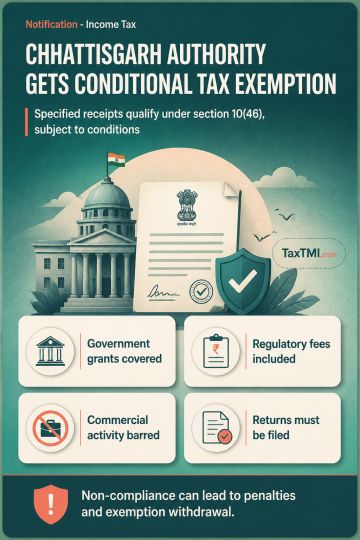
Specified regulatory authority income receives conditional tax exemption, subject to non-commercial activity, unchanged income character, and return f...
Tax exemption for regulatory authority income applies retrospectively, subject to non-commercial activity, unchanged income sources, and return-filing...
Input tax credit conditions remain constitutionally valid, with eligible recipient claims considered under GST circulars and retrospective filing dead...
Bogus donation receipts justified commission income assessment and defeated political-party tax exemption for inaccurate accounts and reporting failur...
Pure reimbursement without income element escapes tax withholding, while delayed withholding and unsupported provisions face deferred or renewed scrut...
Public benefit requirement defeats charitable registration where residents' association services are reciprocal, member-only facilities governed by mu...
Maintainability of curative petition - restoration of arbitral award which had been set aside by the Division Bench of the High court on the ground that it suffered from patently illegality. - The Supreme Court found that invoking curative jurisdiction was justified to prevent a miscarriage of justice. It highlighted the circumstances under which curative petitions could be entertained, emphasizing cases where there is a gross miscarriage of justice or abuse of process. The Court reiterated that interference with arbitral awards should be minimal and only on grounds of patent illegality or perversity. It emphasized that an arbitral tribunal's decision should not be disturbed unless it is evident that a reasonable person could not have arrived at such a decision based on the evidence presented.
Maintainability of curative petition - restoration of arbitral award which had been set aside by the Division Bench of the High court on the ground that it suffered from patently illegality. - The Supreme Court found that invoking curative jurisdiction was justified to prevent a miscarriage of justice. It highlighted the circumstances under which curative petitions could be entertained, emphasizing cases where there is a gross miscarriage of justice or abuse of process. The Court reiterated that interference with arbitral awards should be minimal and only on grounds of patent illegality or perversity. It emphasized that an arbitral tribunal's decision should not be disturbed unless it is evident that a reasonable person could not have arrived at such a decision based on the evidence presented.
Note: It is a system-generated summary and is for quick reference only.
 TaxTMI
 of 4805



















 Join Channel


 TaxTMI

