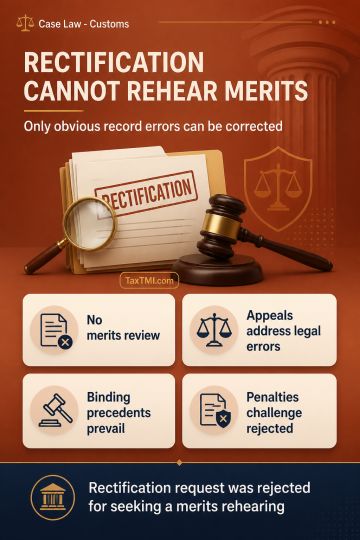
Rectification of mistake remains limited to self-evident record errors, preventing merits review through miscellaneous applications and preserving fin...
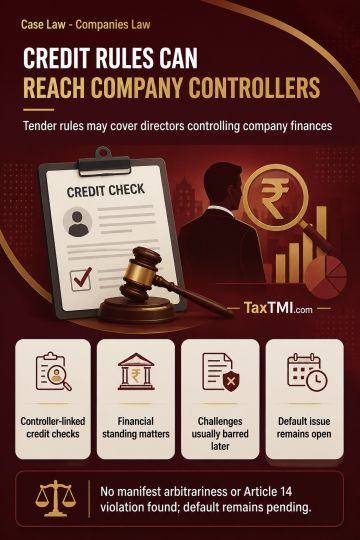
Tender creditworthiness conditions may extend to de facto Promoter Directors, with post-participation challenges generally barred absent arbitrariness...
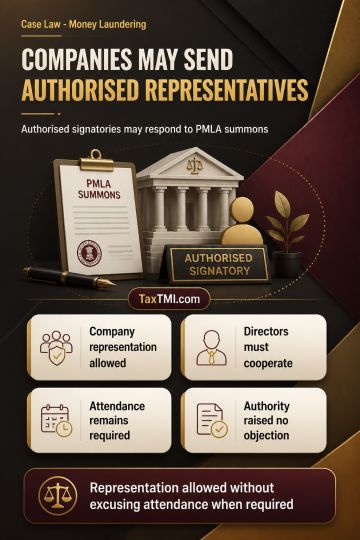
Corporate representation in PMLA summons proceedings permitted through an authorised signatory, subject to directors' continuing cooperation and atten...
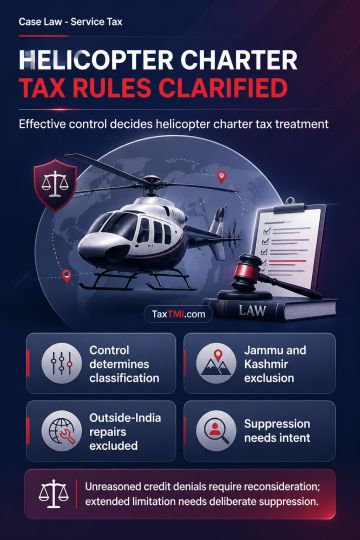
Helicopter charter classification requires effective control analysis, while territorial performance, reasoned credit orders and wilful suppression de...
Deductions u/s 80IC - audit report in Form 10 CCB, due to inadvertence, had not been uploaded online on time - Power of CBDT to condone delay us 119 - Rectification u/s 154 - The High Court observed that the tax authority's failure to act on the rectification request for nearly six years constituted an unreasonable refusal to exercise its statutory powers, thereby violating its duty. Errors made by the petitioner’s Chartered Accountants should not prejudice the petitioner's entitlement to statutory deductions, echoing the principle that the objective of the law is not to penalize taxpayers for inadvertent errors. The court rejected a narrow interpretation of 'genuine hardship' that would only consider severe financial crises, highlighting that the loss of statutory benefits itself constitutes a genuine hardship.
Deductions u/s 80IC - audit report in Form 10 CCB, due to inadvertence, had not been uploaded online on time - Power of CBDT to condone delay us 119 - Rectification u/s 154 - The High Court observed that the tax authority's failure to act on the rectification request for nearly six years constituted an unreasonable refusal to exercise its statutory powers, thereby violating its duty. Errors made by the petitioner’s Chartered Accountants should not prejudice the petitioner's entitlement to statutory deductions, echoing the principle that the objective of the law is not to penalize taxpayers for inadvertent errors. The court rejected a narrow interpretation of 'genuine hardship' that would only consider severe financial crises, highlighting that the loss of statutory benefits itself constitutes a genuine hardship.
Note: It is a system-generated summary and is for quick reference only.
 TaxTMI
  TaxTMI
 of 4813





 Join Channel


