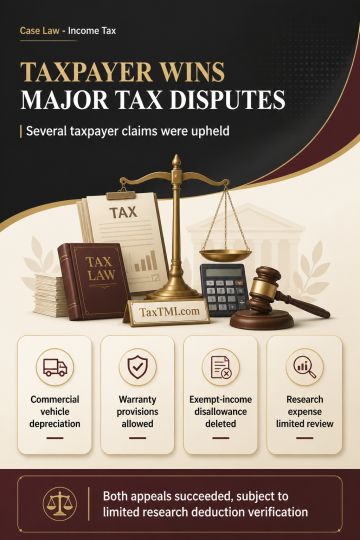
Commercial vehicle depreciation, scientifically determined warranty provisions and exempt-income disallowances were resolved in favour of the taxpayer...
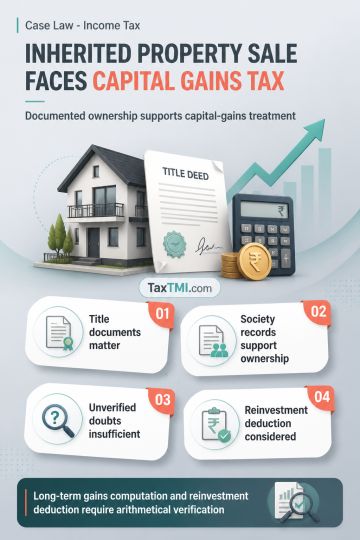
Inherited property sale proceeds require capital-gains treatment where ownership is supported by evidence, not suspicion or unverified signature doubt...
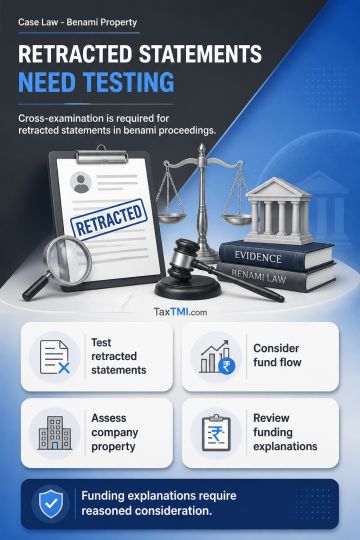
Cross-examination of retracted statements is essential where foundational evidence supports a benami allegation and documented funding explanations re...
Capital-goods exemption covers plant-modernisation accessories, while the import restriction applies only to earlier capital-goods components and spar...
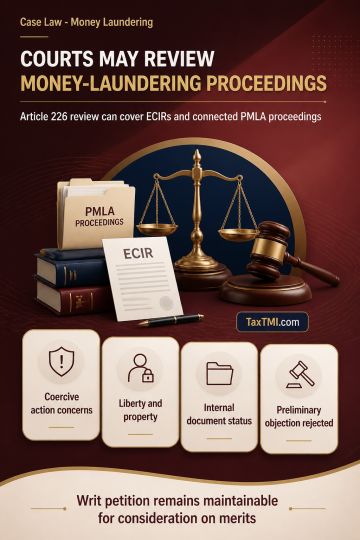
Constitutional judicial review permits challenges to ECIRs and connected money-laundering proceedings where coercive action affects fundamental intere...
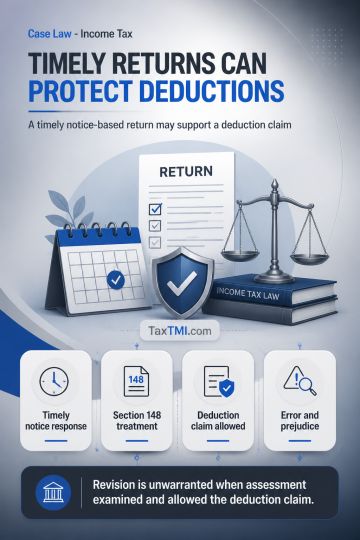
Deductions u/s 80IC - audit report in Form 10 CCB, due to inadvertence, had not been uploaded online on time - Power of CBDT to condone delay us 119 - Rectification u/s 154 - The High Court observed that the tax authority's failure to act on the rectification request for nearly six years constituted an unreasonable refusal to exercise its statutory powers, thereby violating its duty. Errors made by the petitioner’s Chartered Accountants should not prejudice the petitioner's entitlement to statutory deductions, echoing the principle that the objective of the law is not to penalize taxpayers for inadvertent errors. The court rejected a narrow interpretation of 'genuine hardship' that would only consider severe financial crises, highlighting that the loss of statutory benefits itself constitutes a genuine hardship.
Deductions u/s 80IC - audit report in Form 10 CCB, due to inadvertence, had not been uploaded online on time - Power of CBDT to condone delay us 119 - Rectification u/s 154 - The High Court observed that the tax authority's failure to act on the rectification request for nearly six years constituted an unreasonable refusal to exercise its statutory powers, thereby violating its duty. Errors made by the petitioner’s Chartered Accountants should not prejudice the petitioner's entitlement to statutory deductions, echoing the principle that the objective of the law is not to penalize taxpayers for inadvertent errors. The court rejected a narrow interpretation of 'genuine hardship' that would only consider severe financial crises, highlighting that the loss of statutory benefits itself constitutes a genuine hardship.
Note: It is a system-generated summary and is for quick reference only.
 TaxTMI
  TaxTMI
 of 4809







 Join Channel


