AMP expenditure for own business is not an international transaction without an associated-enterprise arrangement, eliminating transfer pricing adjust...
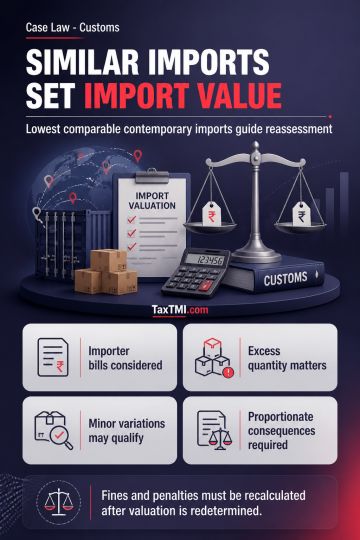
Customs valuation must use comparable contemporary imports, while confiscation fines and penalties require proportionate recalculation on reassessed v...
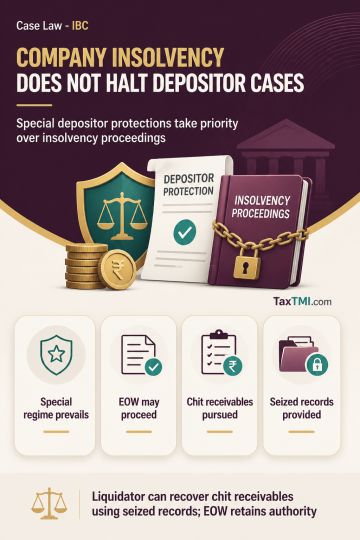
Depositor-protection proceedings prevail over corporate insolvency, while liquidators may recover chit receivables using copies of seized company reco...
Intermediary service classification fails where overseas admission facilitation is supplied independently, preserving export treatment and small-provi...
Satellite transponder bandwidth is telecommunication, not Business Support Service; foreign non-telegraph providers triggered no service tax liability...
Insolvency and BankruptcyApril 15, 2024Case LawsAT
Initiation of CIRP based on a corporate guarantee provided to a consortium of lenders- Validity of deed of Guarantee - The tribunal noted that the guarantee exceeded the statutory limits under Section 186 but highlighted that the corporate debtor and principal borrower were closely linked family businesses. This closeness implied a level of awareness and consent to the risks involved, undermining the appellant's argument for invalidity based on statutory non-compliance. It was established that the deed of guarantee was executed in favor of the trusteeship managing the consortium’s interest, thus granting the lenders, including the respondent bank, the right to enforce the guarantee. The tribunal dismissed the appellant's claim of lack of privity of contract.
Initiation of CIRP based on a corporate guarantee provided to a consortium of lenders- Validity of deed of Guarantee - The tribunal noted that the guarantee exceeded the statutory limits under Section 186 but highlighted that the corporate debtor and principal borrower were closely linked family businesses. This closeness implied a level of awareness and consent to the risks involved, undermining the appellant's argument for invalidity based on statutory non-compliance. It was established that the deed of guarantee was executed in favor of the trusteeship managing the consortium’s interest, thus granting the lenders, including the respondent bank, the right to enforce the guarantee. The tribunal dismissed the appellant's claim of lack of privity of contract.
Note: It is a system-generated summary and is for quick reference only.
 TaxTMI
  TaxTMI
 of 4807



















 Join Channel


