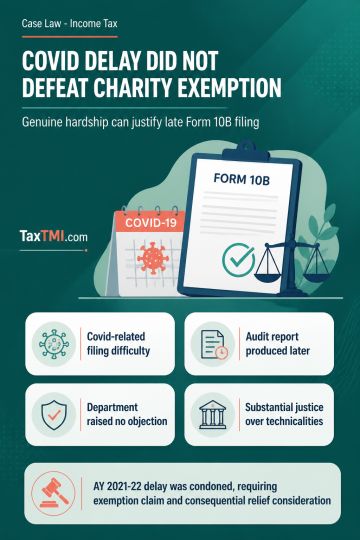
Belated Form 10B filing during Covid-19 cannot defeat charitable exemption where genuine hardship warrants condonation and substantial justice prevail...
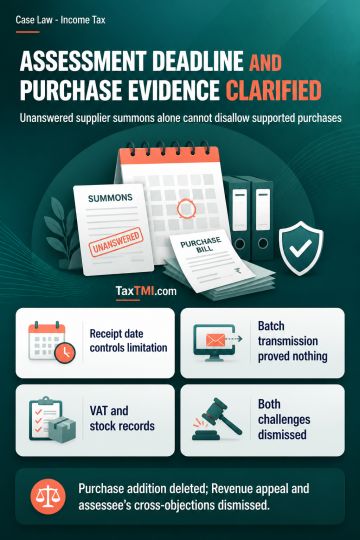
Limitation for consequential assessments runs from prescribed authority receipt, while verified purchases cannot be disallowed merely for unanswered s...
Higher depreciation for qualifying commercial vehicles, exempt-income disallowance, research deduction verification, and club-expense treatment clarif...
Charitable registration renewal cannot become an assessment of receipts, profitability or annual exemption compliance, requiring renewal and donation ...
Page of 4807
Press 'Enter' after typing page number.
101 to 120 of 96140 Results
❮
❯
❯❯
0 / 200
Expand Note
Add to Folder
No Folders have been created
+
Are you sure you want to delete "My most important" ?
Insolvency and BankruptcyApril 15, 2024Case LawsAT
Initiation of CIRP based on a corporate guarantee provided to a consortium of lenders- Validity of deed of Guarantee - The tribunal noted that the guarantee exceeded the statutory limits under Section 186 but highlighted that the corporate debtor and principal borrower were closely linked family businesses. This closeness implied a level of awareness and consent to the risks involved, undermining the appellant's argument for invalidity based on statutory non-compliance. It was established that the deed of guarantee was executed in favor of the trusteeship managing the consortium’s interest, thus granting the lenders, including the respondent bank, the right to enforce the guarantee. The tribunal dismissed the appellant's claim of lack of privity of contract.
Initiation of CIRP based on a corporate guarantee provided to a consortium of lenders- Validity of deed of Guarantee - The tribunal noted that the guarantee exceeded the statutory limits under Section 186 but highlighted that the corporate debtor and principal borrower were closely linked family businesses. This closeness implied a level of awareness and consent to the risks involved, undermining the appellant's argument for invalidity based on statutory non-compliance. It was established that the deed of guarantee was executed in favor of the trusteeship managing the consortium’s interest, thus granting the lenders, including the respondent bank, the right to enforce the guarantee. The tribunal dismissed the appellant's claim of lack of privity of contract.
Note: It is a system-generated summary and is for quick reference only.
 TaxTMI
  TaxTMI
 of 4807













 Join Channel