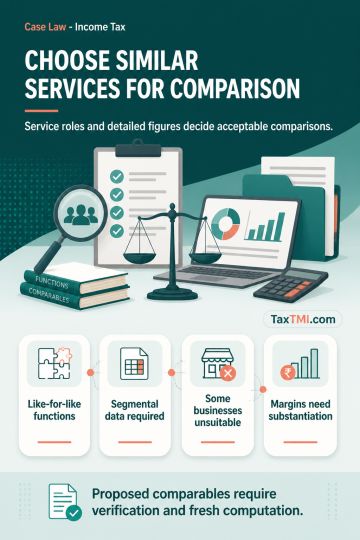
Functional comparability governs selection of support-service and IT-enabled service comparables, with verification required for unresolved data and m...
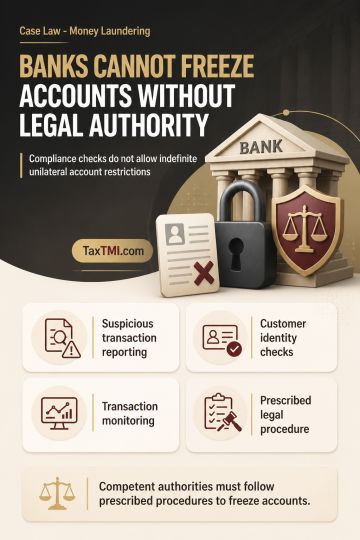
Bank account freezing requires statutory authority; anti-money-laundering compliance and KYC monitoring do not permit unilateral indefinite restrictio...
Lease Agreement - Transfer of Property - Appellant argued that the clause in the lease agreement only applies to voluntary transfers, not to mergers or amalgamations - The Supreme Court interpreted the clause in the lease agreement broadly, finding that it covers both voluntary and involuntary transfers, including mergers. It noted that the clause's language did not exclude involuntary transfers, and thus, the amalgamation fell within its purview. - The Court affirmed that the amalgamation, despite being governed by company law, resulted in a transfer of properties from the transferor to the transferee company. - Thus, the dispute concerning the interpretation of the lease agreement clause in the context of the company amalgamation was resolved in favor of the DDA.
Lease Agreement - Transfer of Property - Appellant argued that the clause in the lease agreement only applies to voluntary transfers, not to mergers or amalgamations - The Supreme Court interpreted the clause in the lease agreement broadly, finding that it covers both voluntary and involuntary transfers, including mergers. It noted that the clause's language did not exclude involuntary transfers, and thus, the amalgamation fell within its purview. - The Court affirmed that the amalgamation, despite being governed by company law, resulted in a transfer of properties from the transferor to the transferee company. - Thus, the dispute concerning the interpretation of the lease agreement clause in the context of the company amalgamation was resolved in favor of the DDA.
Note: It is a system-generated summary and is for quick reference only.
 TaxTMI
  TaxTMI
 of 4828






 Join Channel