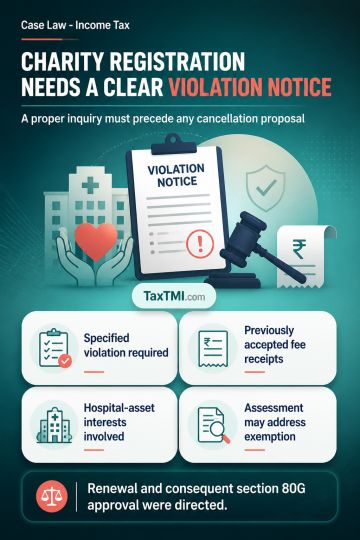
Charitable trust registration requires a specified-violation notice; settled cash deposits and related-party payments did not justify cancellation or ...
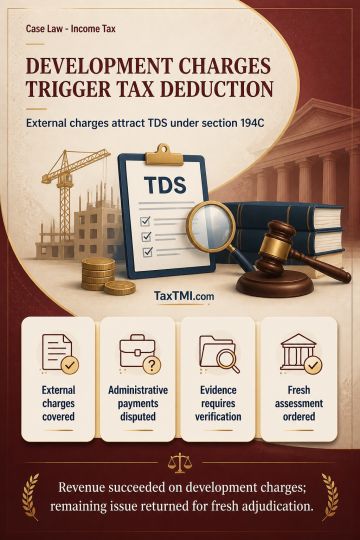
External development charges trigger TDS under section 194C, while disputed administrative payments require factual verification and fresh adjudicatio...
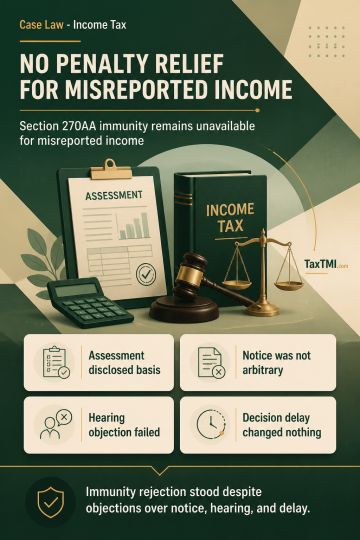
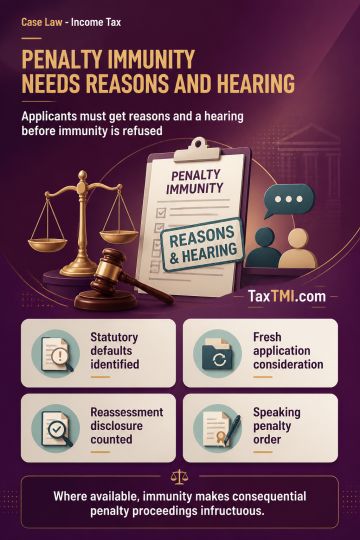
Section 270AA penalty immunity requires identified statutory defaults and a hearing before rejection; reassessment disclosure may constitute under-rep...
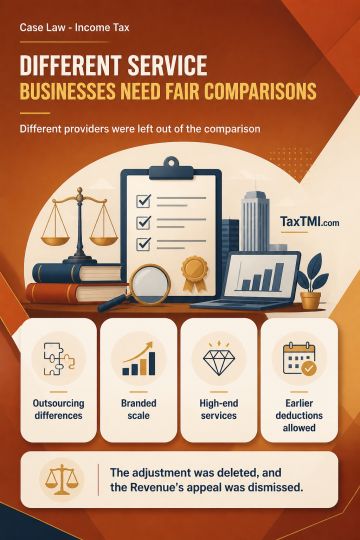
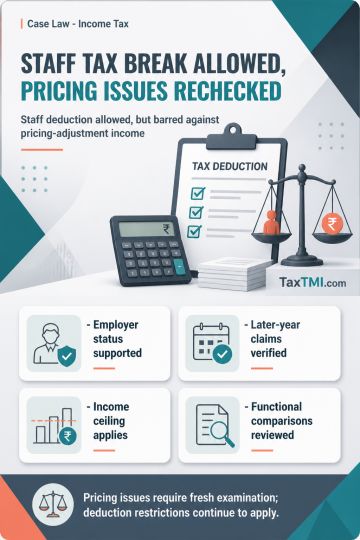
Section 80JJAA employee-cost deduction allowed for deployed staff but barred against transfer-pricing income enhancement, with pricing issues remanded...
Page of 4830
Press 'Enter' after typing page number.
141 to 160 of 96587 Results
❮
❯
❯❯
0 / 200
Expand Note
Add to Folder
No Folders have been created
+
Are you sure you want to delete "My most important" ?
Levy of VAT (tax) - Turnover of old machinery and equipment after the closure of business - The central contention is the interpretation of the amended definition of "business" and the classification of the assets sold. The revisionist argues for a broader interpretation, encompassing all transactions related to goods acquired during business operation, while the respondent maintains that the assets sold are capital goods and thus exempt from taxation. - The High Court, after careful consideration, rules in favor of the respondent (assessee). It emphasizes that the amended definition of "business" restricts taxation to the sale of goods acquired during business operation, excluding transactions post-business closure. Additionally, the Court agrees with the lower authorities' classification of the assets sold as capital goods, affirming that they fall outside the taxable scope of the Act.
Levy of VAT (tax) - Turnover of old machinery and equipment after the closure of business - The central contention is the interpretation of the amended definition of "business" and the classification of the assets sold. The revisionist argues for a broader interpretation, encompassing all transactions related to goods acquired during business operation, while the respondent maintains that the assets sold are capital goods and thus exempt from taxation. - The High Court, after careful consideration, rules in favor of the respondent (assessee). It emphasizes that the amended definition of "business" restricts taxation to the sale of goods acquired during business operation, excluding transactions post-business closure. Additionally, the Court agrees with the lower authorities' classification of the assets sold as capital goods, affirming that they fall outside the taxable scope of the Act.
Note: It is a system-generated summary and is for quick reference only.
 TaxTMI
  TaxTMI
 of 4830






 Join Channel


