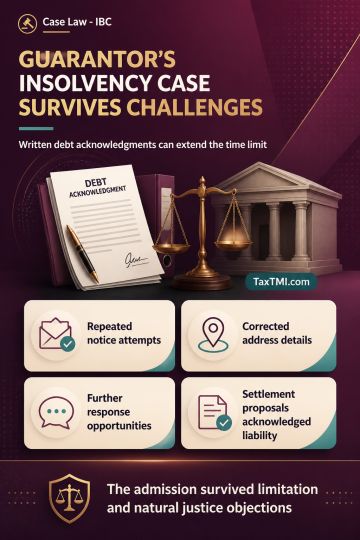
Service of notice and contractual debt acknowledgment preserved insolvency admission against a corporate guarantor despite limitation and natural just...
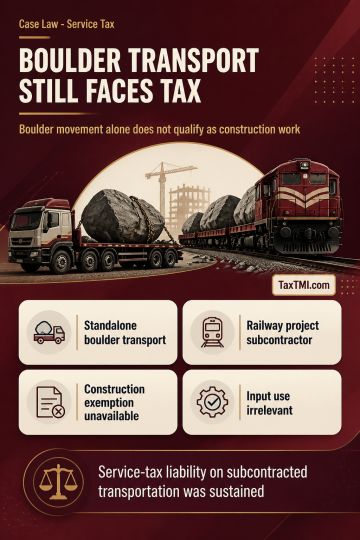
Original works exemption excludes standalone boulder transportation, leaving subcontracted railway-project transport services subject to service tax l...
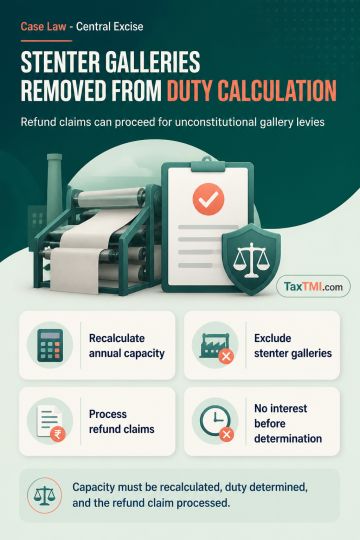
Annual production capacity determinations excluding stenter galleries support refunds for unconstitutional excise levies without an unjust-enrichment ...
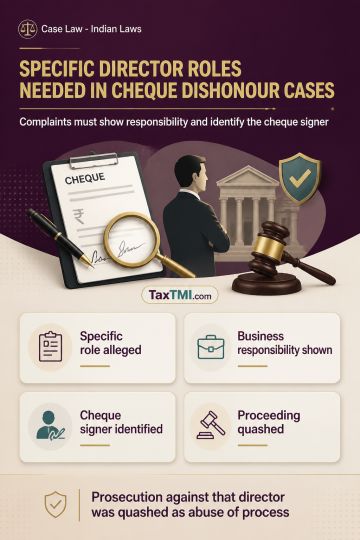
Vicarious liability for cheque dishonour requires specific allegations of responsibility and cheque signatory; generic director allegations cannot sus...
IT Resilience Index requires market infrastructure institutions to automate resilience scoring, early warnings, and continuous service-delivery monito...
Dishonor of Cheque - Ascertaining nature of transaction - whether a criminal proceeding can be initiated and an accused held guilty when there is already a civil court decree concerning the same transaction - The Supreme Court acknowledges the conflicting nature of civil and criminal proceedings concerning the same issue and transaction. However, it emphasizes that the standard of proof and burden of evidence in civil and criminal cases are different. - the Supreme Court clarifies that while civil court decisions may have persuasive value, they are not binding on criminal courts, except for limited purposes such as sentence or damages. - the Supreme Court concludes that the criminal proceedings, including the conviction and damages imposed by lower courts, are unsustainable. It asserts that the criminal court must abide by the civil court's declaration regarding the nature of the cheque involved.
Dishonor of Cheque - Ascertaining nature of transaction - whether a criminal proceeding can be initiated and an accused held guilty when there is already a civil court decree concerning the same transaction - The Supreme Court acknowledges the conflicting nature of civil and criminal proceedings concerning the same issue and transaction. However, it emphasizes that the standard of proof and burden of evidence in civil and criminal cases are different. - the Supreme Court clarifies that while civil court decisions may have persuasive value, they are not binding on criminal courts, except for limited purposes such as sentence or damages. - the Supreme Court concludes that the criminal proceedings, including the conviction and damages imposed by lower courts, are unsustainable. It asserts that the criminal court must abide by the civil court's declaration regarding the nature of the cheque involved.
Note: It is a system-generated summary and is for quick reference only.
 TaxTMI
  TaxTMI
 of 4828










 Join Channel