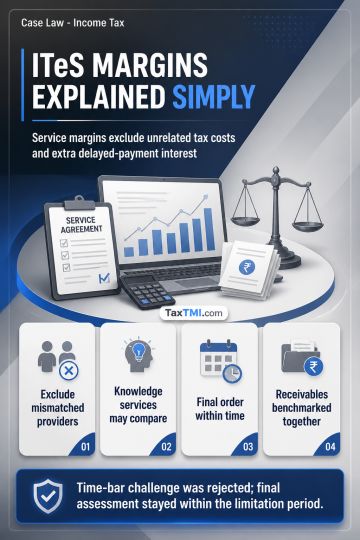
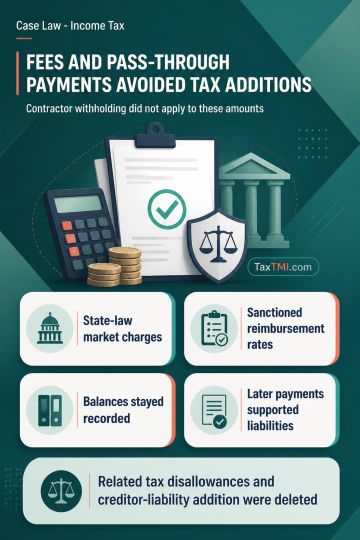
Transfer-pricing treatment of ITeS margins excludes pass-through tax recoveries and separate delayed-receivables interest after working-capital adjust...
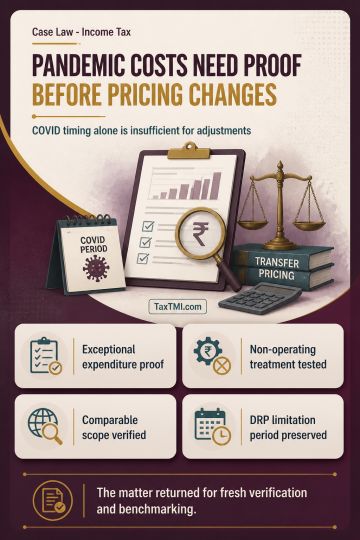
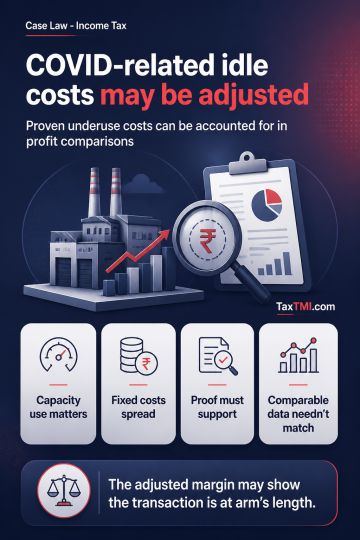
Capacity-utilisation adjustments under TNMM can neutralise substantiated COVID-related idle costs where underutilisation materially affects profitabil...
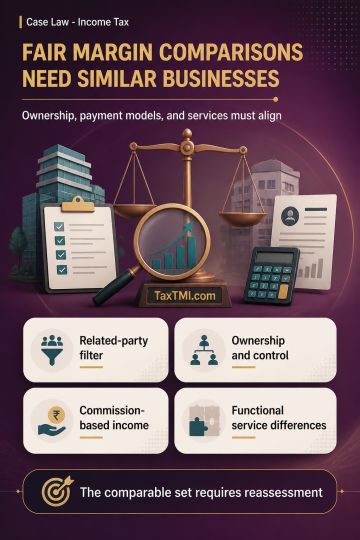
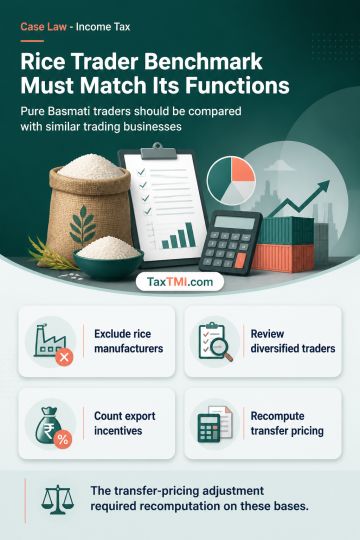
TNMM functional comparability requires excluding rice manufacturers from a pure Basmati rice trader's benchmark and recognising operating export recei...
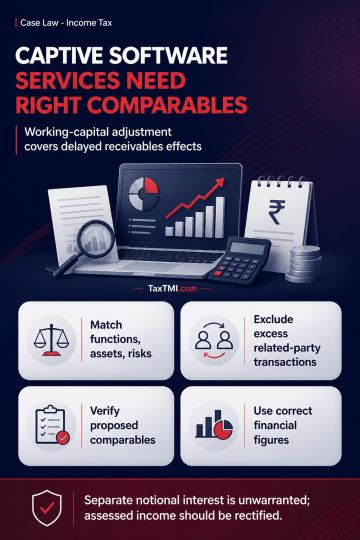
Working-capital adjustment subsumes delayed-receivable effects in TNMM benchmarking of captive software-development services, avoiding separate notion...
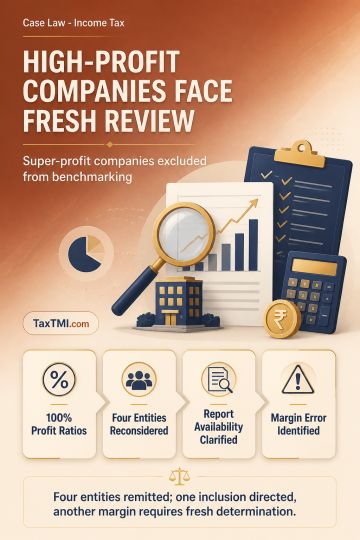
Transfer-pricing comparability requires exclusion of financially illogical super-profit comparables and correction of unsupported annual-report and ma...
Charitable character assessment preserves Section 80G approval despite inclusive spiritual teachings and incidental religious expenditure within the s...
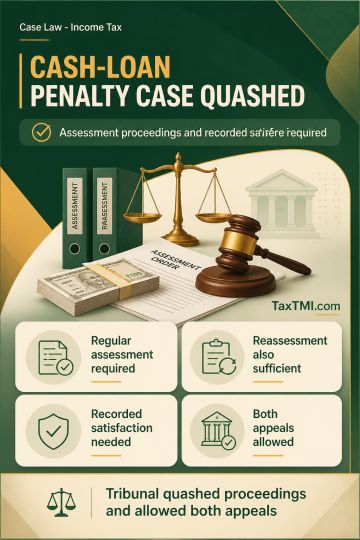
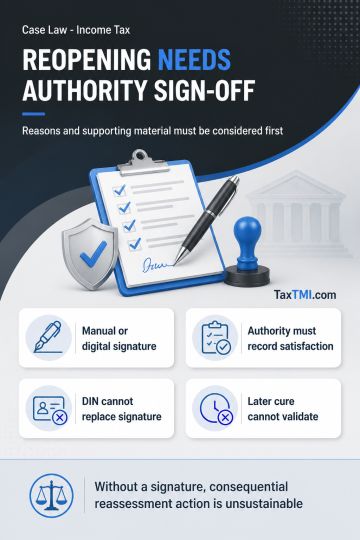
Penalty proceedings for cash-loan acceptance require assessment proceedings and recorded Assessing Officer satisfaction; absent these, the proceedings...
Page of 4828
Press 'Enter' after typing page number.
161 to 180 of 96556 Results
❮
❯
❯❯
0 / 200
Expand Note
Add to Folder
No Folders have been created
+
Are you sure you want to delete "My most important" ?
Constitutional power of the Central Government over State - The imposition of a Net Borrowing Ceiling on the state - The inclusion of State-Owned Enterprises in the borrowing restrictions - The adjustment of over-borrowing from previous fiscal years against the current year's borrowing limit - Significantly, the Supreme Court decided to refer these constitutional questions to a larger bench, acknowledging the lack of previous authoritative interpretation on Article 293 and recognizing the potential implications for the federal structure of governance in India. - On the matter of granting interim relief to the state, the Court applied the triple-test criteria: prima facie case, balance of convenience, and irreparable injury. The judgment concluded that the state failed to establish a compelling prima facie case, noting discrepancies in the claimed fiscal space for borrowing and highlighting the Union's arguments on over-utilization of borrowing limits.
Constitutional power of the Central Government over State - The imposition of a Net Borrowing Ceiling on the state - The inclusion of State-Owned Enterprises in the borrowing restrictions - The adjustment of over-borrowing from previous fiscal years against the current year's borrowing limit - Significantly, the Supreme Court decided to refer these constitutional questions to a larger bench, acknowledging the lack of previous authoritative interpretation on Article 293 and recognizing the potential implications for the federal structure of governance in India. - On the matter of granting interim relief to the state, the Court applied the triple-test criteria: prima facie case, balance of convenience, and irreparable injury. The judgment concluded that the state failed to establish a compelling prima facie case, noting discrepancies in the claimed fiscal space for borrowing and highlighting the Union's arguments on over-utilization of borrowing limits.
Note: It is a system-generated summary and is for quick reference only.
 TaxTMI
  TaxTMI
 of 4828




 Join Channel