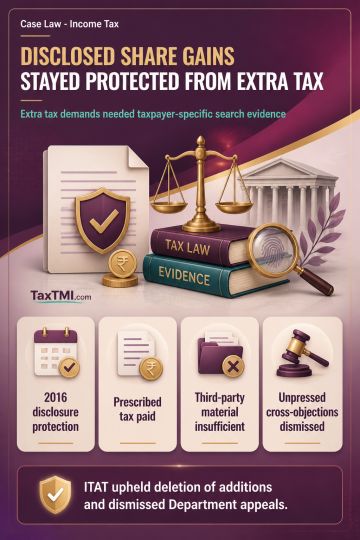
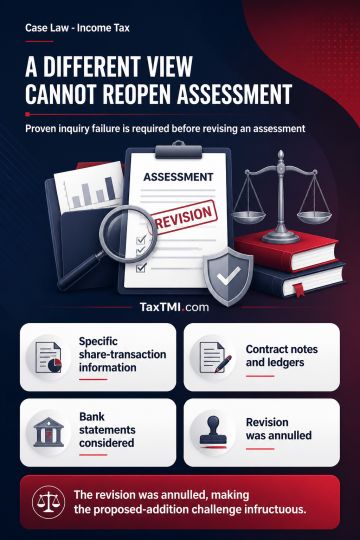
Income Disclosure Scheme immunity and search-material requirements barred further share-transaction additions in unabated assessments under section 15...
Toy balloon tariff classification: functional heading prevails over residual rubber and festive article headings, supporting penalties for deliberate ...
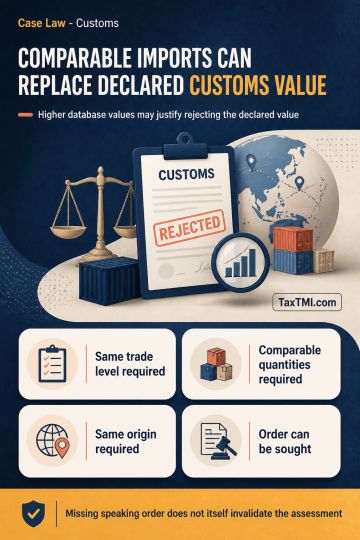
Customs valuation using comparable contemporaneous imports can displace declared value, while missing speaking orders require pursuit before competent...
Constitutional power of the Central Government over State - The imposition of a Net Borrowing Ceiling on the state - The inclusion of State-Owned Enterprises in the borrowing restrictions - The adjustment of over-borrowing from previous fiscal years against the current year's borrowing limit - Significantly, the Supreme Court decided to refer these constitutional questions to a larger bench, acknowledging the lack of previous authoritative interpretation on Article 293 and recognizing the potential implications for the federal structure of governance in India. - On the matter of granting interim relief to the state, the Court applied the triple-test criteria: prima facie case, balance of convenience, and irreparable injury. The judgment concluded that the state failed to establish a compelling prima facie case, noting discrepancies in the claimed fiscal space for borrowing and highlighting the Union's arguments on over-utilization of borrowing limits.
Constitutional power of the Central Government over State - The imposition of a Net Borrowing Ceiling on the state - The inclusion of State-Owned Enterprises in the borrowing restrictions - The adjustment of over-borrowing from previous fiscal years against the current year's borrowing limit - Significantly, the Supreme Court decided to refer these constitutional questions to a larger bench, acknowledging the lack of previous authoritative interpretation on Article 293 and recognizing the potential implications for the federal structure of governance in India. - On the matter of granting interim relief to the state, the Court applied the triple-test criteria: prima facie case, balance of convenience, and irreparable injury. The judgment concluded that the state failed to establish a compelling prima facie case, noting discrepancies in the claimed fiscal space for borrowing and highlighting the Union's arguments on over-utilization of borrowing limits.
Note: It is a system-generated summary and is for quick reference only.
 TaxTMI
  TaxTMI
 of 4830







 Join Channel


