Retention of seized property survives where recorded reasons support proceeds of crime, while stayed investigation periods are excluded from limitatio...
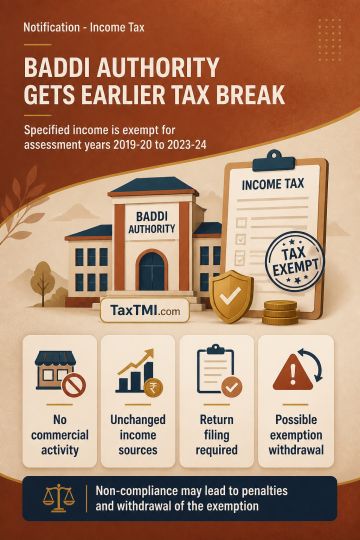
Specified income of Baddi Barotiwala Nalagarh Development Authority receives conditional tax exemption, retrospectively covering its designated assess...
Specified development authority income receives retrospective tax exemption, subject to non-commercial activity, unchanged income sources, and return-...
Unified Brand India framework introduces voluntary Trust Mark certification and funding support for export branding, packaging and global promotional ...
Origin Declaration authentication governs preferential tariff claims under India-UK CETA, requiring a validated reference number before import clearan...
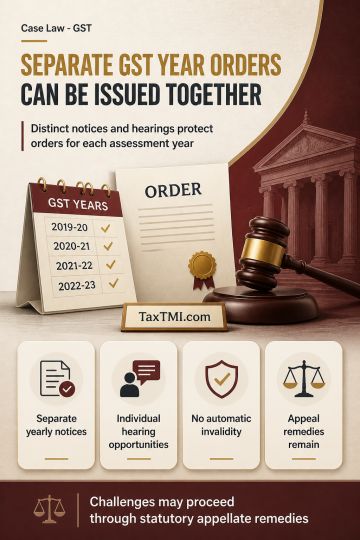
Separate assessment orders for different years remain valid when distinct notices and hearing opportunities prevent prejudice from combined proceeding...
Taxability in India of receipts of foreign AEs - Fee for Technical Services (FTS) - Master Service Agreement relied upon - The Tribunal extensively reviewed the MSA, emphasizing that it established an independent contractor relationship between the Indian entity and its foreign counterparts. It highlighted that the foreign entities had ownership of the intellectual property developed, bore the risk of performance, and had an obligation to indemnify the Indian entity for errors or performance issues. - The ITAT's ruling clarifies the distinction between revenue sharing from a consolidated project and FTS, reinforcing the principle that the nature of the payment depends on the underlying contractual relationships and the actual conduct of parties. - It was held that payments made by HCLT to the foreign AEs could not be construed as FTS.
Taxability in India of receipts of foreign AEs - Fee for Technical Services (FTS) - Master Service Agreement relied upon - The Tribunal extensively reviewed the MSA, emphasizing that it established an independent contractor relationship between the Indian entity and its foreign counterparts. It highlighted that the foreign entities had ownership of the intellectual property developed, bore the risk of performance, and had an obligation to indemnify the Indian entity for errors or performance issues. - The ITAT's ruling clarifies the distinction between revenue sharing from a consolidated project and FTS, reinforcing the principle that the nature of the payment depends on the underlying contractual relationships and the actual conduct of parties. - It was held that payments made by HCLT to the foreign AEs could not be construed as FTS.
Note: It is a system-generated summary and is for quick reference only.
 TaxTMI
 of 4801












 Join Channel


 TaxTMI