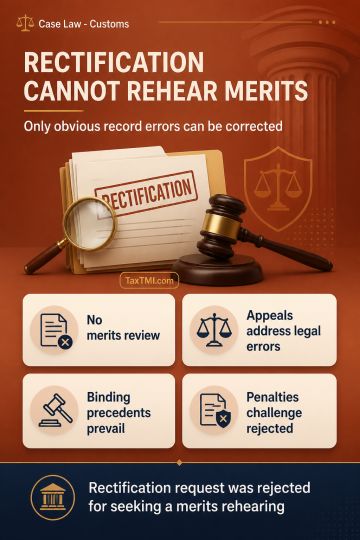
Rectification of mistake remains limited to self-evident record errors, preventing merits review through miscellaneous applications and preserving fin...
Tender creditworthiness conditions may extend to de facto Promoter Directors, with post-participation challenges generally barred absent arbitrariness...
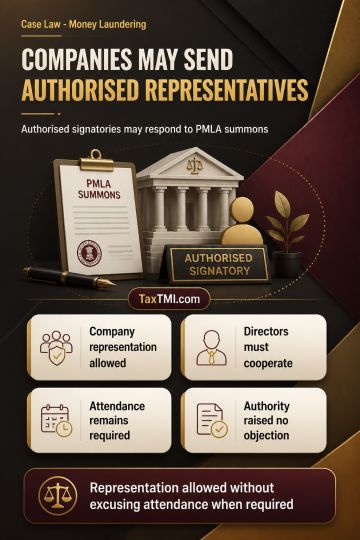
Corporate representation in PMLA summons proceedings permitted through an authorised signatory, subject to directors' continuing cooperation and atten...
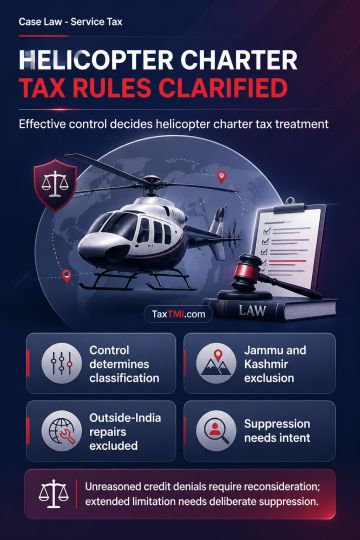
Helicopter charter classification requires effective control analysis, while territorial performance, reasoned credit orders and wilful suppression de...
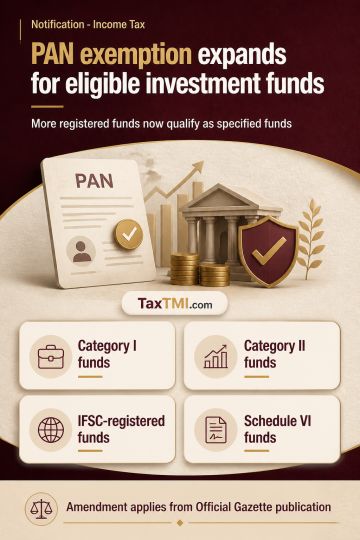
Specified fund definition expands PAN exemption eligibility for registered alternative investment funds and qualifying International Financial Service...
Page of 4798
Press 'Enter' after typing page number.
821 to 840 of 95955 Results
❮
❯
❯❯
0 / 200
Expand Note
Add to Folder
No Folders have been created
+
Are you sure you want to delete "My most important" ?
Taxability in India of receipts of foreign AEs - Fee for Technical Services (FTS) - Master Service Agreement relied upon - The Tribunal extensively reviewed the MSA, emphasizing that it established an independent contractor relationship between the Indian entity and its foreign counterparts. It highlighted that the foreign entities had ownership of the intellectual property developed, bore the risk of performance, and had an obligation to indemnify the Indian entity for errors or performance issues. - The ITAT's ruling clarifies the distinction between revenue sharing from a consolidated project and FTS, reinforcing the principle that the nature of the payment depends on the underlying contractual relationships and the actual conduct of parties. - It was held that payments made by HCLT to the foreign AEs could not be construed as FTS.
Taxability in India of receipts of foreign AEs - Fee for Technical Services (FTS) - Master Service Agreement relied upon - The Tribunal extensively reviewed the MSA, emphasizing that it established an independent contractor relationship between the Indian entity and its foreign counterparts. It highlighted that the foreign entities had ownership of the intellectual property developed, bore the risk of performance, and had an obligation to indemnify the Indian entity for errors or performance issues. - The ITAT's ruling clarifies the distinction between revenue sharing from a consolidated project and FTS, reinforcing the principle that the nature of the payment depends on the underlying contractual relationships and the actual conduct of parties. - It was held that payments made by HCLT to the foreign AEs could not be construed as FTS.
Note: It is a system-generated summary and is for quick reference only.
 TaxTMI
 of 4798









 Join Channel


 TaxTMI