Tax exemption for regulatory authority income applies retrospectively, subject to non-commercial activity, unchanged income sources, and return filing...
Dispute Resolution Panel objections must reach both prescribed forums; otherwise assessment may proceed and statutory appeal remains the proper remedy...
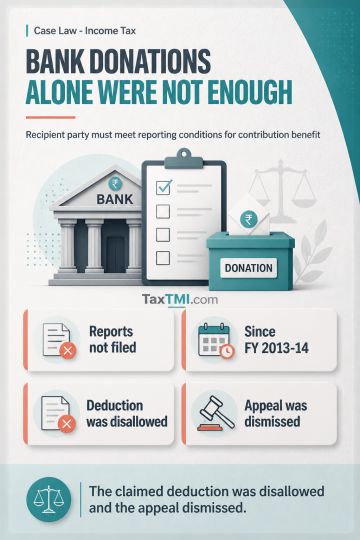
Political contribution deductions require recipient party compliance with contribution-reporting conditions; banking-channel donations alone do not qu...
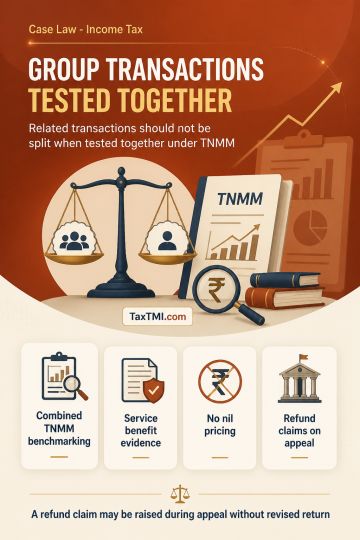
Aggregation under TNMM prevents selective testing of intra-group services without comparable uncontrolled transactions, while appellate additional cla...
Protective assessment cannot duplicate identical receipts under competing characterisations; remote services did not establish a taxable permanent est...
Page of 4792
Press 'Enter' after typing page number.
461 to 480 of 95833 Results
❮
❯
❯❯
0 / 200
Expand Note
Add to Folder
No Folders have been created
+
Are you sure you want to delete "My most important" ?
Taxability in India of receipts of foreign AEs - Fee for Technical Services (FTS) - Master Service Agreement relied upon - The Tribunal extensively reviewed the MSA, emphasizing that it established an independent contractor relationship between the Indian entity and its foreign counterparts. It highlighted that the foreign entities had ownership of the intellectual property developed, bore the risk of performance, and had an obligation to indemnify the Indian entity for errors or performance issues. - The ITAT's ruling clarifies the distinction between revenue sharing from a consolidated project and FTS, reinforcing the principle that the nature of the payment depends on the underlying contractual relationships and the actual conduct of parties. - It was held that payments made by HCLT to the foreign AEs could not be construed as FTS.
Taxability in India of receipts of foreign AEs - Fee for Technical Services (FTS) - Master Service Agreement relied upon - The Tribunal extensively reviewed the MSA, emphasizing that it established an independent contractor relationship between the Indian entity and its foreign counterparts. It highlighted that the foreign entities had ownership of the intellectual property developed, bore the risk of performance, and had an obligation to indemnify the Indian entity for errors or performance issues. - The ITAT's ruling clarifies the distinction between revenue sharing from a consolidated project and FTS, reinforcing the principle that the nature of the payment depends on the underlying contractual relationships and the actual conduct of parties. - It was held that payments made by HCLT to the foreign AEs could not be construed as FTS.
Note: It is a system-generated summary and is for quick reference only.
 TaxTMI
 of 4792










 Join Channel


 TaxTMI