Capital reduction is distinct from share buy-back, preventing buy-back tax; restructuring interest and related business deductions also survive scruti...
Transfer pricing and tax deductions upheld on established principles, while employee contributions and warranty provisions returned for fresh examinat...
Captive transfer pricing relies on industrial consumer tariffs, while genuine quotations can benchmark effluent treatment transfers under the Other Me...
Specific tariff classification for ophthalmic instruments and extended limitation principles determine the treatment of duty demands, confiscation, an...
Integrated golf function determines classification, placing launch monitors and simulators under other golf equipment rather than measuring instrument...
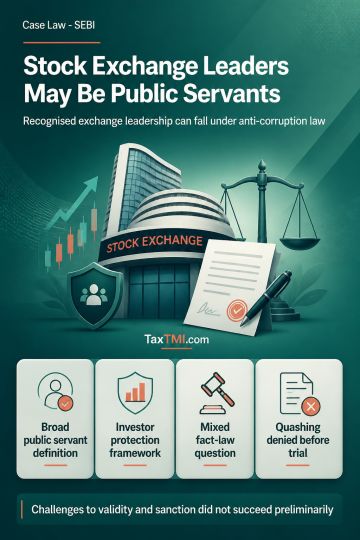
Public servant status under anti-corruption law extends to recognised stock exchange leadership; constitutional and sanction challenges do not succeed...
Page of 4786
Press 'Enter' after typing page number.
881 to 900 of 95714 Results
❮
❯
❯❯
0 / 200
Expand Note
Add to Folder
No Folders have been created
+
Are you sure you want to delete "My most important" ?
Classification of imported goods - plastic regrind - waste or not - restricted goods or prohibited goods - The Tribunal acknowledges the restrictions on the import of plastic waste under the Foreign Trade Policy (FTP) but finds that the lower authorities failed to provide sufficient evidence to justify the classification of the disputed goods as 'waste.' As a result, the Tribunal sets aside the decision to confiscate the goods. - The Tribunal deems the proposed destruction of goods as unlawful under the Customs Act, 1962, and orders the goods to be released to the importer.
Classification of imported goods - plastic regrind - waste or not - restricted goods or prohibited goods - The Tribunal acknowledges the restrictions on the import of plastic waste under the Foreign Trade Policy (FTP) but finds that the lower authorities failed to provide sufficient evidence to justify the classification of the disputed goods as 'waste.' As a result, the Tribunal sets aside the decision to confiscate the goods. - The Tribunal deems the proposed destruction of goods as unlawful under the Customs Act, 1962, and orders the goods to be released to the importer.
Note: It is a system-generated summary and is for quick reference only.
 TaxTMI
 of 4786



















 Join Channel


 TaxTMI