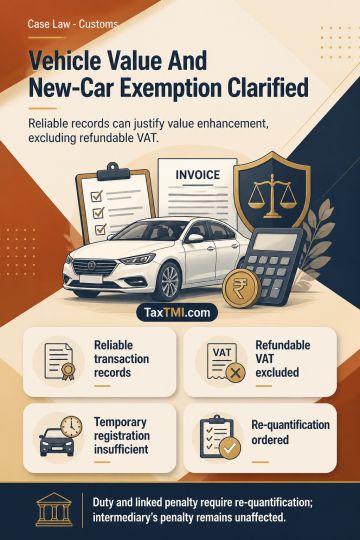
Transaction value rejection requires reliable corroboration; refundable VAT is excluded and temporary registration does not defeat new-vehicle exempti...
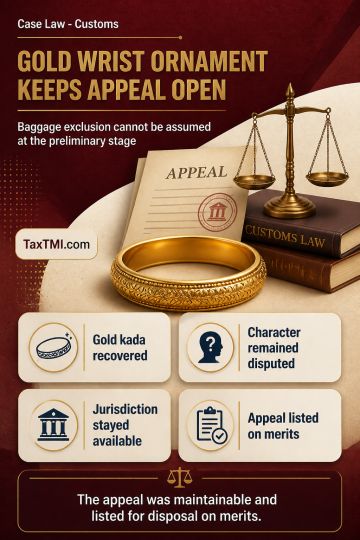
Appellate jurisdiction remains available where a wrist-worn gold ornament cannot conclusively be characterised as imported baggage at the preliminary ...
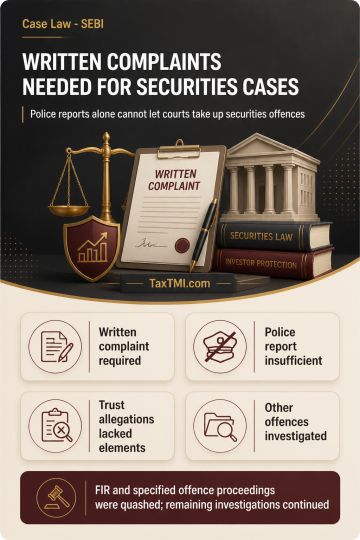
Written complaint requirement bars cognizance on police reports for securities offences, while unsupported breach of trust and cheating allegations fa...
Risk-based postal import clearance standardises electronic assessment, document requests, duty realisation and delivery controls at Foreign Post Offic...
Customs Cargo Service Provider appointment extends custodianship to additional terminal land, subject to cargo-control, security and licence condition...
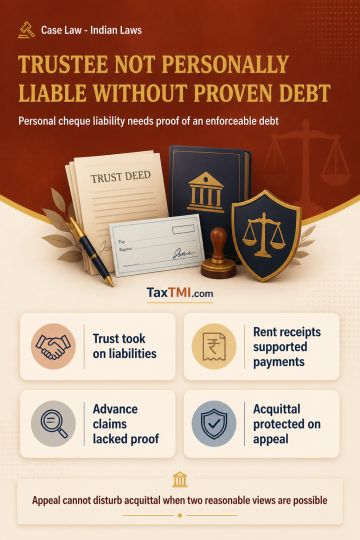
Dishonour of cheque - Respondent (accused) denied issuing the cheques and claimed they were taken from his office by the complainant. - The Trial Court found the ledger produced by the complainant to be inadmissible as it lacked a certificate u/s 65B of the Evidence Act. - The Trial Court held that since the signatures on the cheques were admitted by the respondent, the presumption u/s 138 would arise. - The Trial Court found that the accused had raised a probable defense by asserting that he used to sell goods to the complainant and the cheques were not issued for any legally recoverable debt or liability. - The High Court emphasized the limited scope of interference in appeals against acquittals, stating that unless the view taken by the Trial Court is impossible or perverse, interference is not warranted.
Dishonour of cheque - Respondent (accused) denied issuing the cheques and claimed they were taken from his office by the complainant. - The Trial Court found the ledger produced by the complainant to be inadmissible as it lacked a certificate u/s 65B of the Evidence Act. - The Trial Court held that since the signatures on the cheques were admitted by the respondent, the presumption u/s 138 would arise. - The Trial Court found that the accused had raised a probable defense by asserting that he used to sell goods to the complainant and the cheques were not issued for any legally recoverable debt or liability. - The High Court emphasized the limited scope of interference in appeals against acquittals, stating that unless the view taken by the Trial Court is impossible or perverse, interference is not warranted.
Note: It is a system-generated summary and is for quick reference only.
 TaxTMI
 of 4785





 Join Channel


 TaxTMI