Minimum alternate tax exclusions for pre-amendment banking companies and expatriate Indian branch salaries remain outside head office expenditure limi...
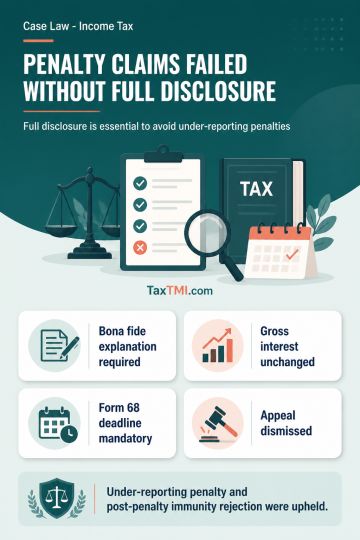
Bona fide disclosure requirements govern under-reporting penalties, and post-penalty immunity applications cannot secure available statutory protectio...
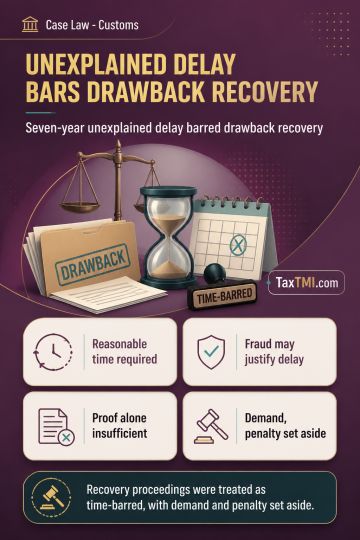
Certificate-of-origin verification procedure governs preferential customs benefits; denial without retroactive verification was set aside with consequ...
Disciplinary Committee jurisdiction and mandatory investigation requirements invalidated cancellation of an insolvency professional's registration and...
The High Court affirmed the independence of proceedings under the PMLA, clarifying that while the outcome of the scheduled offense may have some bearing on the PMLA case, the prosecution must independently prove the allegations under the PMLA. - The Court criticized the complainant for presuming that the scheduled offense automatically generated proceeds of crime, emphasizing the need for independent proof. It noted deficiencies in the evidence presented by the prosecution, particularly regarding the source of the alleged proceeds of crime. - Ultimately, the High Court concluded that the appeal lacked merit and upheld the trial court's decision to dismiss the complaint. It emphasized that an acquittal should not be disturbed unless there are serious legal infirmities or factual errors, which were not present in this case.
The High Court affirmed the independence of proceedings under the PMLA, clarifying that while the outcome of the scheduled offense may have some bearing on the PMLA case, the prosecution must independently prove the allegations under the PMLA. - The Court criticized the complainant for presuming that the scheduled offense automatically generated proceeds of crime, emphasizing the need for independent proof. It noted deficiencies in the evidence presented by the prosecution, particularly regarding the source of the alleged proceeds of crime. - Ultimately, the High Court concluded that the appeal lacked merit and upheld the trial court's decision to dismiss the complaint. It emphasized that an acquittal should not be disturbed unless there are serious legal infirmities or factual errors, which were not present in this case.
Note: It is a system-generated summary and is for quick reference only.
 TaxTMI
 of 4801















 Join Channel


 TaxTMI